
Search Tennessee Property Records
Tennessee property records can be searched through county assessors, registers of deeds, trustee offices, and statewide assessment tools. Some Tennessee records focus on parcel values and ownership history. Others help you find deeds, tax status, exemptions, or older land records. Start with the county where the land sits. From there, you can move between assessment data, deed indexes, tax offices, and archives. This page brings together the main Tennessee property records sources so you can search, compare, and request the records that fit your purpose.
Tennessee Property Records Quick Facts
Tennessee Property Records Search
Tennessee property records are spread across more than one office. Most people begin with assessment data, because it gives a quick path to parcel IDs, owner names, land values, improvement details, and property record cards. The main statewide starting point is the Tennessee Comptroller Division of Property Assessments, which oversees policies and technical support for county assessors and maintains statewide assessment resources. The office notes that its assessment data tools serve 86 of the 95 Tennessee counties through the IMPACT CAMA system. The remaining nine counties use independent systems, so Tennessee searches sometimes branch to county-specific assessor sites instead of one shared database.
The statewide assessment search itself is the Tennessee Property Assessment Data portal. Tennessee users can search by property address, owner name, or parcel ID, and many counties expose property record cards with land, improvement, classification, and ownership details. For many Tennessee property records searches, that is the fastest first step. It helps you confirm that the parcel is in the right county and gives you the basic identifiers you need before you request deeds, plats, or tax records from a local office.
Before using county pages on this site, review the official state assessment page for system coverage and the TPAD search portal for direct lookup. Tennessee property records searches go more smoothly when you have a parcel ID, owner name spelling, and site address in hand.

The Tennessee assessment page also points users to field operations, parcel data stewardship, and land-use materials. That matters because Tennessee property records are not just ownership snapshots. They also tie into assessment cycles, exemption processing, and parcel mapping support at the county level.
See the Division of Property Assessments if you want the broad Tennessee view before moving to a county office.

Those manuals and guidance pages help explain why values change, when notices go out, and how Tennessee assessors handle classification and review work before the local board season starts.
Tennessee Property Records Offices
County assessors and registers of deeds do different work. In Tennessee, the assessor handles appraisal and assessment data. The register of deeds handles recorded instruments such as deeds, deeds of trust, mortgages, liens, plats, and powers of attorney. If you need parcel facts, start with the assessor. If you need the recorded ownership trail, start with the register. Many Tennessee property records requests require both offices because assessment data can point you to the parcel, while the deed office gives you the transfer history and recorded document images.
The CTAS registers of deeds directory is a useful statewide contact source. It lists all 95 Tennessee counties and summarizes standard recording charges, including $12 for the first two pages and $5 for each additional page. The same CTAS material notes Tennessee transfer tax at $0.37 per $100 of consideration and mortgage tax at $0.115 per $100 over the exempt first $2,000. Those statewide figures help explain many Tennessee deed recording costs even when each county office sets its own day-to-day copy process.
The Tennessee Constitution and statutory structure also matter. The CTAS property tax legal reference explains that counties and municipalities may levy property tax under Article II, Section 28, while T.C.A. § 67-5-101 provides that property is assessed unless exempt. This legal frame shows why Tennessee property records often connect parcel ownership, assessed value, and tax administration in one search process instead of treating them as separate silos.
Use the CTAS directory when you need a direct county recording office and the CTAS property tax reference when you want the legal context behind Tennessee property records.
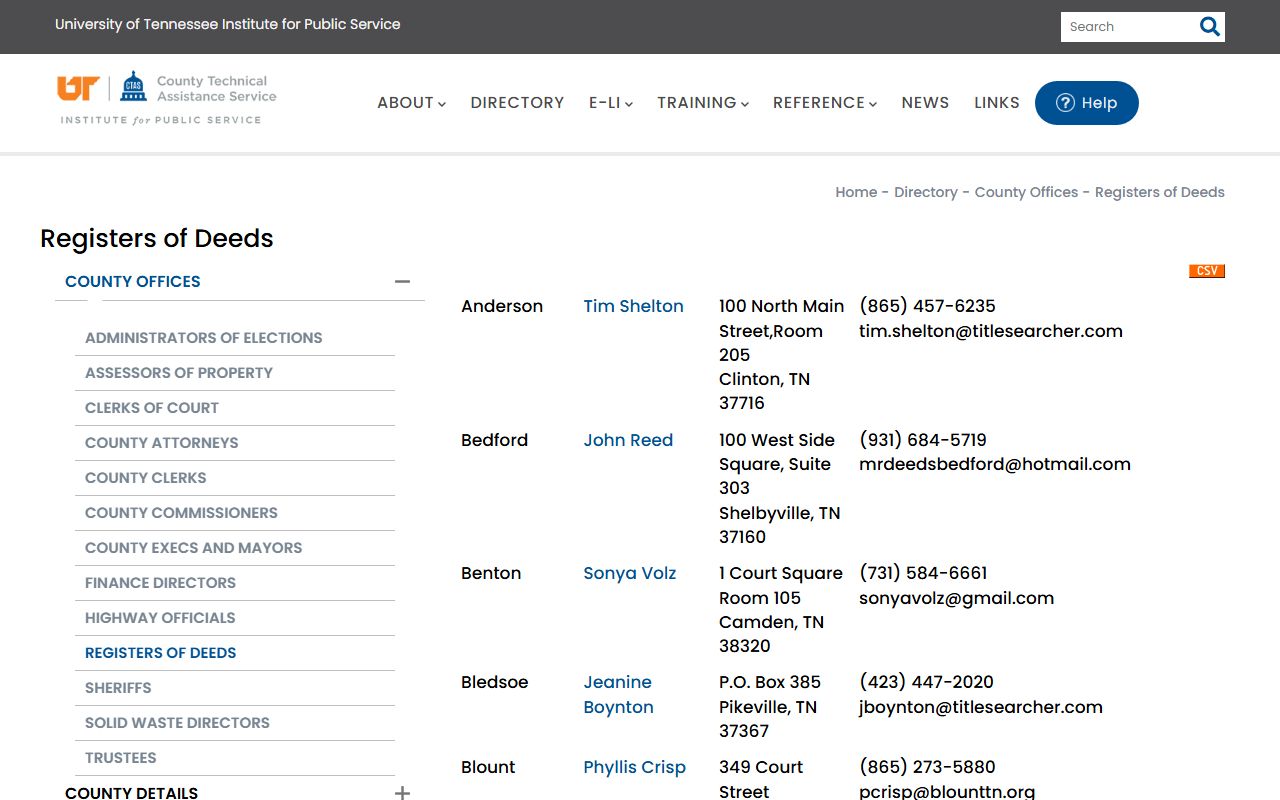
The directory is one of the most practical Tennessee resources because it helps you move from a statewide search to the exact county office that records and certifies local property documents.
The legal reference is also worth checking before appeal or exemption questions. It gives plain-language context for how Tennessee property records fit into the tax system.
That legal reference does not replace county instructions, but it helps explain the terms you will see in Tennessee property records and tax notices.
Tennessee Property Records Appeals
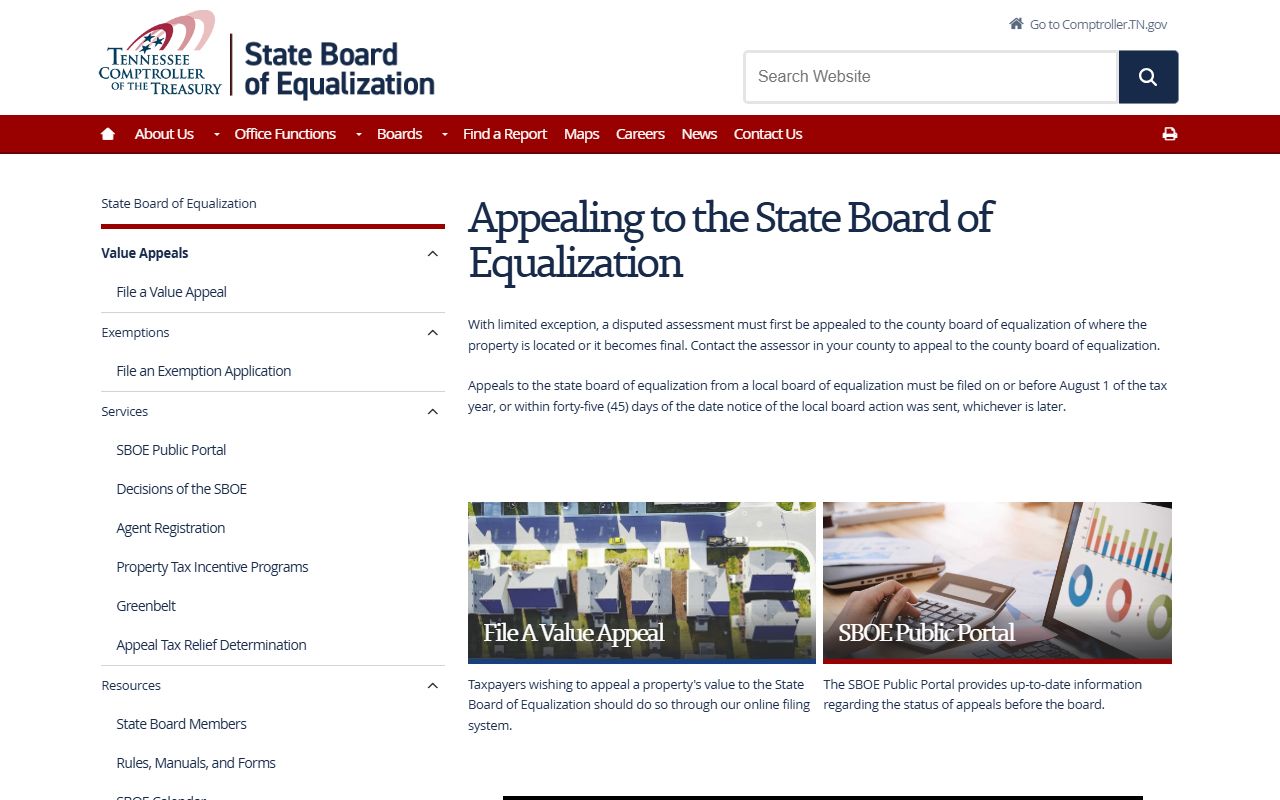
Tennessee property records also support assessment appeals. If a county notice shows a change in value, the records tied to your parcel become part of the review path. The state materials explain that assessors must send change notices before the local board of equalization begins its annual session. The State Board of Equalization page and the value appeals guidance explain the appeal ladder: county board first, then state board, then chancery court review if needed.
Tennessee sets a specific state-level timing rule. Appeals to the state board must be filed on or before August 1 of the tax year, or within 45 days from the date notice of local board action was sent, whichever is later. Tennessee users who plan to challenge an assessment should gather the parcel card, photos, comparable facts, and the notice itself early. Those items turn a general complaint into a record-based appeal.
Property tax assistance programs also sit close to the record system. The Tennessee property tax relief program serves qualifying elderly and disabled homeowners and disabled veteran homeowners or surviving spouses. The property tax programs page explains the separate tax freeze structure, which freezes the tax amount rather than the value or rate. Tennessee counties and cities administer these programs locally, so the parcel and tax records you find at the county level often tie into those applications.
Review the state board page before an appeal filing.

The state board page helps explain deadlines, hearing steps, and review rights after a local decision.
See the value appeals guide for the date rules and payment expectations tied to Tennessee property records disputes.
Check the tax freeze program page if your Tennessee property records search is tied to senior tax relief planning.
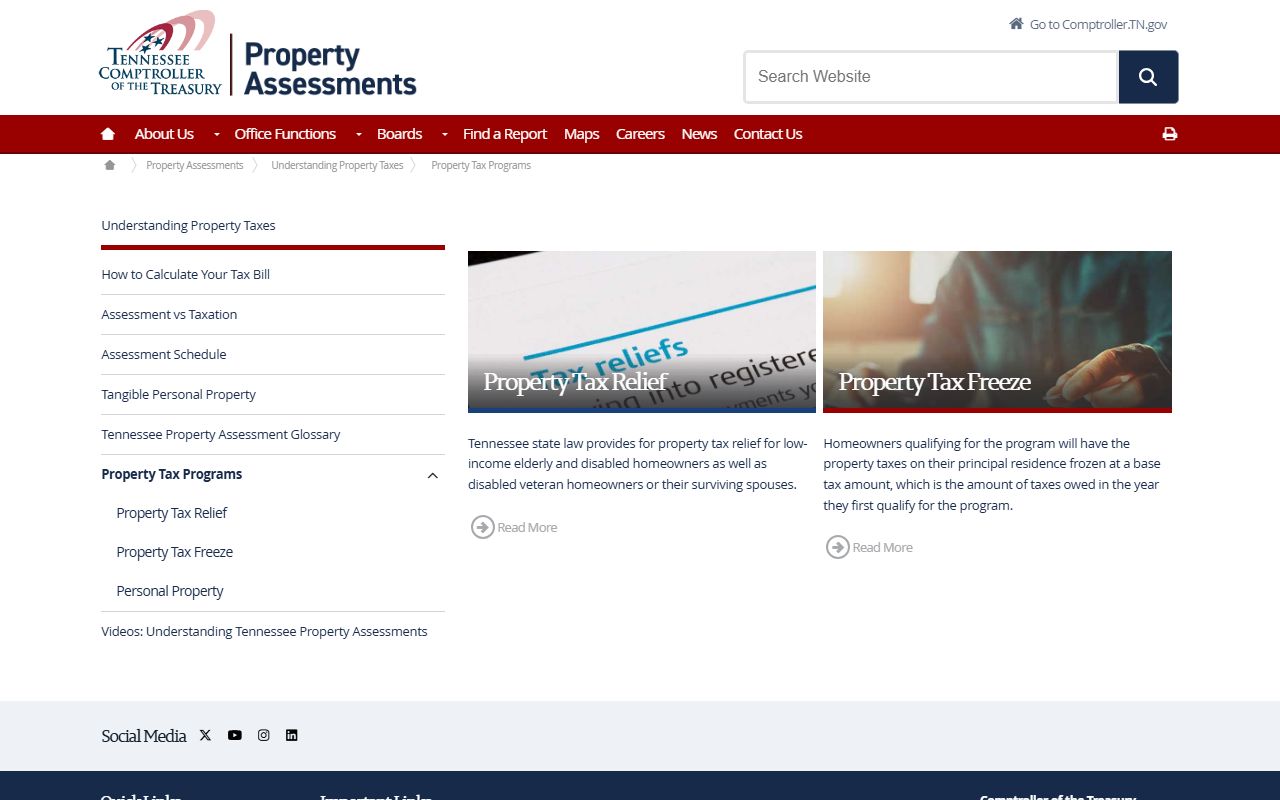
That page clarifies that the program freezes the tax bill amount, not the assessment figure on the parcel record.
Tennessee Deeds And History
Many Tennessee property records users need more than current tax data. They need historical land records. The Tennessee State Library and Archives is important when your search reaches beyond modern county portals. The archives hold original warrants, surveys, grants, and North Carolina land records. Research collections include the Tennessee General Grants series beginning in 1806, plus district-specific grant groups that help trace older land history. Tennessee researchers can also use microfilm covering governor's land grants from 1775 through 1905, with interlibrary loan availability noted by the archives.
Historical work often comes up when early county deed volumes are incomplete, when parcels predate current map systems, or when land passed through grants before later courthouse recording. Tennessee property records from the county level and Tennessee historical land records from the archives are often complementary, not competing, sources. One tells you what a modern parcel looks like. The other helps explain how the land entered the legal chain in the first place.
Older deed recording also connects to the state tax rules. The Tennessee Department of Revenue explains that deeds must include an affidavit of consideration to be recordable, while real property transfer tax guidance states the $0.37 per $100 rate and some exemptions. Those rules shape many current Tennessee deed filings, especially when you move from a parcel search to an actual recorded transfer document.
Explore the state archives when a parcel search turns into land history work.

The archives become especially useful when early deed books are thin, damaged, or linked to older grant systems instead of modern parcel portals.
Use the Department of Revenue page when you need the state tax and recording framework behind a deed filing.

That revenue guidance helps connect transfer tax and recording requirements to the document side of Tennessee property records.
Tennessee Property Records Requests
Not every Tennessee property records request ends with a website search. Some records are available online, but some still require a formal public records request or direct contact with the local office. The Comptroller public records page explains that many assessment materials, reports, manuals, and related documents are already online. For records not posted, Tennessee users can contact the Public Records Request Coordinator. The state page also states that proof of Tennessee citizenship is required for access under the public records policy adopted pursuant to T.C.A. § 10-7-503(g).
That rule matters most when your Tennessee request is aimed at state-held assessment data, manuals, or related records rather than a county deed office. In local practice, county offices remain the main stop for parcel cards, deed copies, certified recordings, and tax account details. Still, the state request page helps show how Tennessee property records access works when the record is held outside the local courthouse system.
The state research also points to the Secretary of State business search, which can help identify the legal name behind an LLC or corporation shown as an owner on Tennessee property records. That is not a property database by itself, but it can help you connect a deed or parcel owner name to a registered business entity when ownership is not obvious from the parcel card alone.
Review the state records request page when Tennessee property records research moves beyond county search portals.
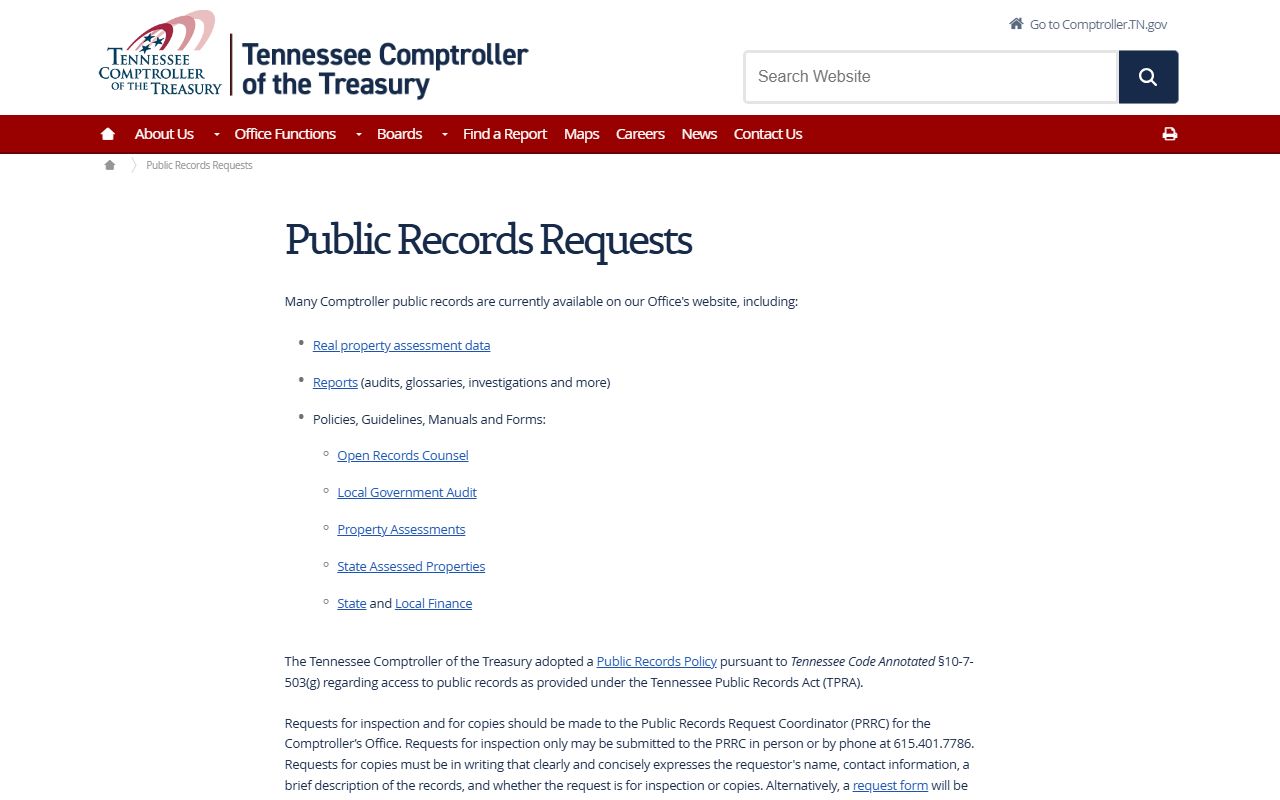
That page helps frame what is already online, what needs a request, and what proof may be needed for access.
Use the Secretary of State business search when a parcel owner appears as a company and you need to identify the Tennessee entity behind the name.

That extra step can make Tennessee property records searches much clearer when the owner is an LLC, partnership, or corporate filer.
Note: Tennessee property records searches work best when you move from statewide tools to county offices, then to archives or public records channels only when the local search leaves gaps.
Tennessee Property Records By County
County pages on this site focus on the local offices that actually keep and explain Tennessee property records. Use a county page when you need assessor details, register of deeds contact points, trustee deadlines, local images, and county-specific search notes.
Tennessee Property Records In Cities
City pages explain which county office controls the property records for that place, along with city-facing search tips and tax context where the research supports it.