
Search Hamilton County Property Records
Hamilton County Property Records are spread across several strong local tools, so the search goes faster when you match the record type to the right office at the start. Deeds and recorded instruments belong with the register of deeds, parcel values and ownership fields belong with the assessor, mapping details sit in the GIS viewer, and tax status belongs with the trustee. In Hamilton County, that office split is easy to use because Chattanooga-area property records are supported by independent county systems rather than a thin statewide listing alone.
Hamilton County Property Records Facts
Hamilton County Property Records Search
The local search path in Hamilton County is unusually clear. The register of deeds handles recorded land instruments, the property assessor maintains parcel and value information, the GIS viewer adds map-based property detail, and the trustee tax inquiry shows tax account status. Because Hamilton County runs an independent CAMA system, the local tools matter more here than a generic statewide parcel portal.
The assessor research is specific about search methods. Parcel numbers can be entered in formats such as 139 001.01 or 129P B 010. Street searches can be broad, and owner names are expected in a last-name first format like Doe John. Those small search rules make a real difference when Hamilton County Property Records return too many results or no result at all on the first try.
That means the cleanest workflow is to confirm the parcel first, then move into the recorded document trail or tax side only after the parcel identity matches the property you mean to review. Hamilton County Property Records are strongest when each system is used for the task it actually controls.
Hamilton County Property Records And Deeds
The recorded side of Hamilton County Property Records runs through the register of deeds. Research identifies Marc Gravitt as register and notes that the office records deeds, mortgages, powers of attorney, plats, marriage settlements, military discharges, and other instruments required by Tennessee law. That gives the county page a solid title-search frame. If your question is about how ownership changed, when a mortgage was filed, or whether a plat was recorded, the register is the right starting point.
Hamilton County also supports e-recording through Simplifile and Corporation Service Company. The register portal notes online database access with a monthly subscription and recommends current versions of Chrome, Firefox, or Edge for the best experience. Those details matter because this is not just a static office listing. Hamilton County Property Records on the recording side are built around an active online register system with its own access rules and browser expectations.
Review the local register resource at register.hamiltontn.gov before shifting from parcel data to document data.
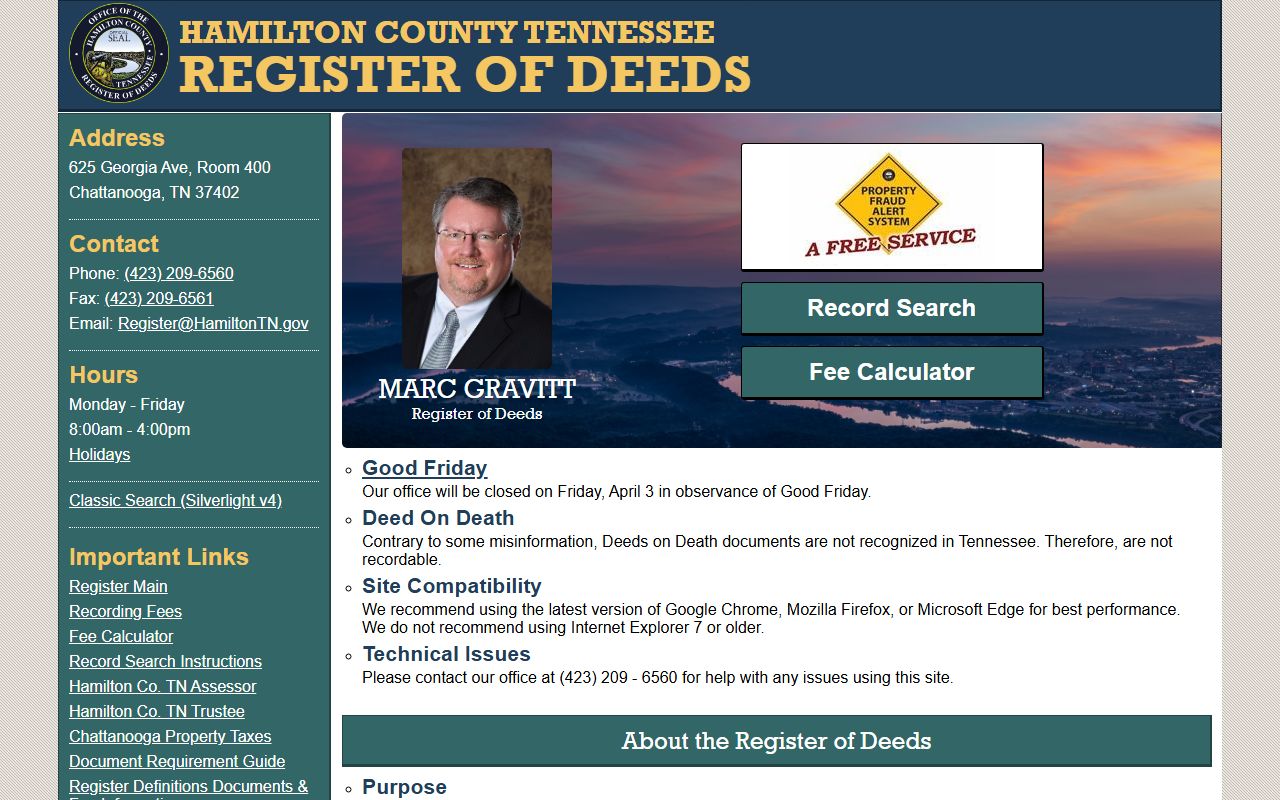
That image is useful because the register portal is one of the county's core property tools, not a secondary support page.
When a deed is ready to record, Tennessee's real property transfer tax guidance still controls transfer-tax treatment and the affidavit of value rules that accompany many conveyances. The state rule does not replace Hamilton County recording procedures, but it shapes how a deed package is prepared and checked before it reaches the local record books.
Hamilton County Assessment Records
The assessor side of Hamilton County Property Records is unusually detailed. The assessor portal identifies Marty Haynes as assessor and lists the office at 6135 Heritage Park Drive in Chattanooga. The research also explains that the office appraises each parcel in the county, handles personal property valuation for businesses, and receives the first level of property-owner appeals. That gives this page a stronger local value-search path than many counties provide.
Because the assessor site supports owner, parcel, and street searches, it is often the best place to start with Hamilton County Property Records when you only have an address or an owner name. The broad-search option is also important. Leaving a field blank can widen results, which helps when street names or owner spellings are inconsistent across tax and deed records.
The statewide framework still matters. Tennessee's Division of Property Assessments explains how local assessors fit into the broader assessment system, while the property assessment manuals provide the rule background behind parcel classification and value work. Those state materials are not substitutes for Hamilton County Property Records, but they explain why the county parcel card looks the way it does.
Open the assessor resource at assessor.hamiltontn.gov when you need the local parcel layer first.
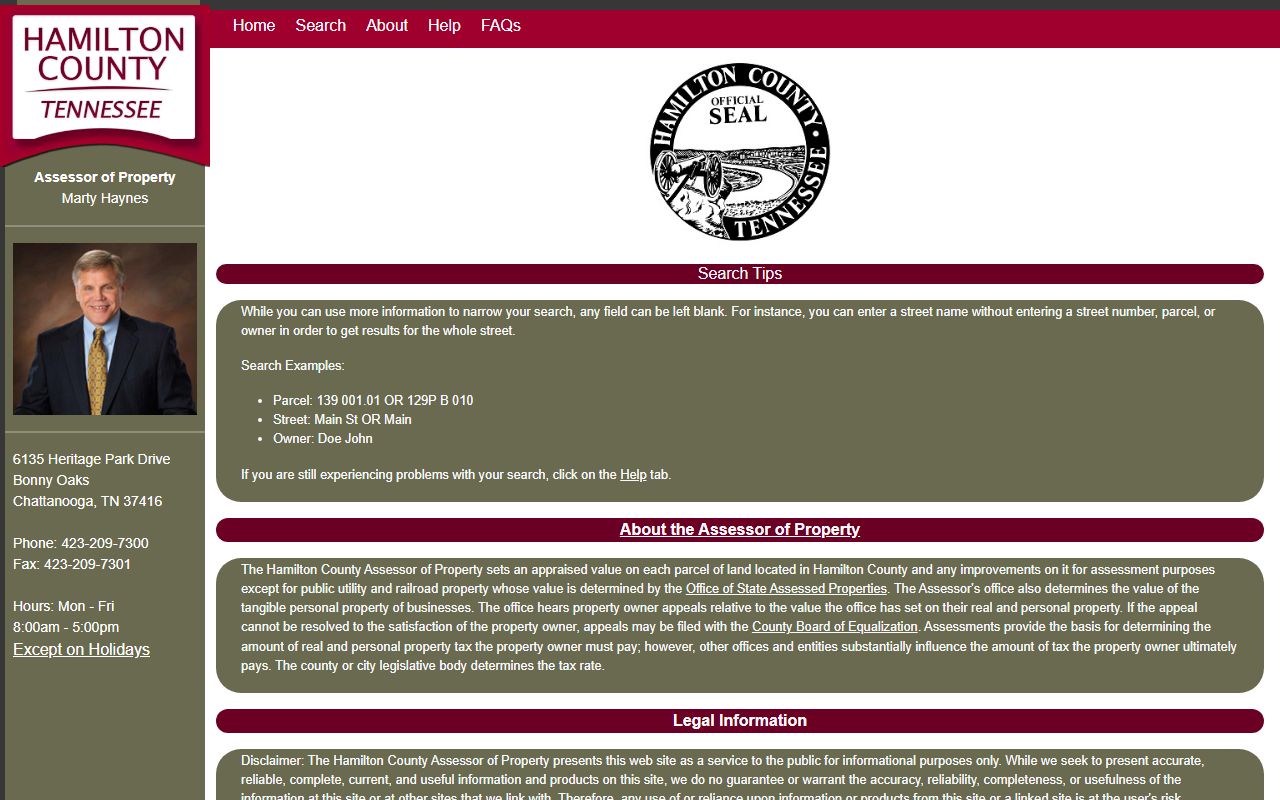
The assessor image belongs here because valuation, ownership display, and parcel search are central to the Hamilton County workflow.
Hamilton County GIS And Tax Records
The Hamilton County GIS viewer adds another layer to Hamilton County Property Records by combining mapping with property details. Research says the viewer includes tax bill information and payment status, which makes it more than a simple parcel map. It is often the fastest way to confirm whether the parcel you found in the assessor system is the same parcel shown in the tax account or the same tract described in a recorded deed.
The trustee side is equally important. The property tax inquiry system is tied to Bill Hullander's office at the courthouse on Georgia Avenue in Chattanooga and gives the county a direct local path for tax-account review. If the issue is a bill, delinquency question, or payment status, Hamilton County Property Records should move to the trustee side instead of staying in the deed or assessment portals.
Check the county GIS resource at gismaps.hamiltontn.gov when map context matters.
The GIS viewer helps when a parcel description, tax map, or location question needs to line up with the assessor and trustee records.
Tennessee's property tax relief and property tax programs pages are also relevant once the tax side is in play. They do not alter title, but they can shape how a qualifying owner reads the account side of Hamilton County Property Records.
Hamilton County Property Records Appeals
Appeals in Hamilton County Property Records start locally with the assessor and can continue to the county board of equalization. If the matter is not resolved there, Tennessee sends the next step to the State Board of Equalization. The state board and the value appeals guidance explain the filing window, including the August 1 or 45-day rule that often controls whether a second-level appeal is still timely.
That deadline makes recordkeeping important. A clean appeal file usually includes the parcel card, notice of value change, photos, measurements, and any comparable sale or condition detail that explains why the local value is disputed. Hamilton County Property Records are strong enough locally that most appeal files can be assembled from the assessor portal, the GIS view, and the county tax inquiry screen before you ever look for state forms.
The state board page is where the timing rules should be confirmed before a second-level appeal is filed.
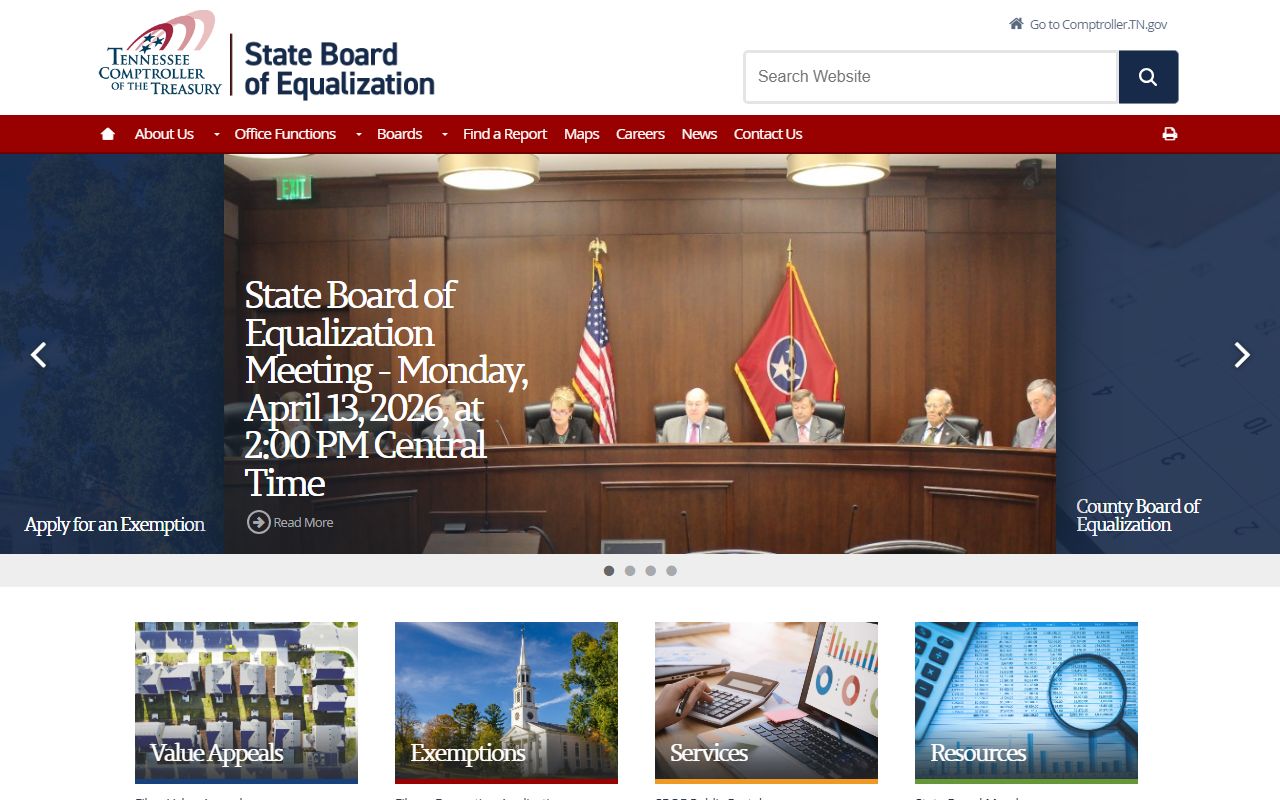
That state image works here because Hamilton County uses detailed local systems, but the appeal timetable still comes from Tennessee.
Hamilton County Property Records Access
Most Hamilton County Property Records requests can be resolved through the county's own online tools and office contacts. The register handles the recorded legal history. The assessor handles current parcel and value information. The GIS viewer supports map-based review. The trustee handles tax status and account questions. When those roles are kept separate, the search becomes much more precise and much less frustrating.
If the file you need is held by the state rather than the county, the Comptroller public records request process is the cleaner route. That matters most for state-held assessment materials, manuals, or administrative records that do not sit in Hamilton County's local portals. Hamilton County Property Records are easiest to navigate when local tools are exhausted first and state requests are used only for the records Tennessee actually holds.
More County Pages
If you need another county after reviewing Hamilton County Property Records, use the live county pages below. Each page stays tied to its own offices, search path, and local source set.