
Search Knox County Property Records
Knox County Property Records are spread across several strong local systems, so the search works best when you match the record type to the right office from the start. In Knoxville, the assessor handles parcel and value work, the register of deeds handles the recorded land trail, KGIS provides map-based property context, and the trustee handles tax-account searches and payment functions. If you are trying to obtain a deed, compare a parcel card, map a tract, or review a tax account, this page brings the main Knox County Property Records tools together in one local workflow.
Knox County Property Records Facts
Knox County Property Records Search
The local search path in Knox County is stronger than in most counties because the county runs an independent CAMA system and pairs it with separate assessor, register, GIS, and trustee resources. The main local tools are the property assessor, the register of deeds, the KGIS mapping portal, and the trustee. For Knox County Property Records, that means you do not need to rely on a vague statewide search when the county already offers stronger local systems.
The research also gives useful scale. Knox County has 201,339 parcels, including 167,029 residential parcels and 7,627 commercial parcels, with a median home value of $224,050. Those figures matter because they explain why Knox County Property Records are organized through a robust county system instead of a simpler single-page office listing. Large-county volume changes the way the search should be approached. You need the right local tool first, not just the right office name.
If your search starts with a parcel, open the assessor portal at knoxcounty.org/property first.
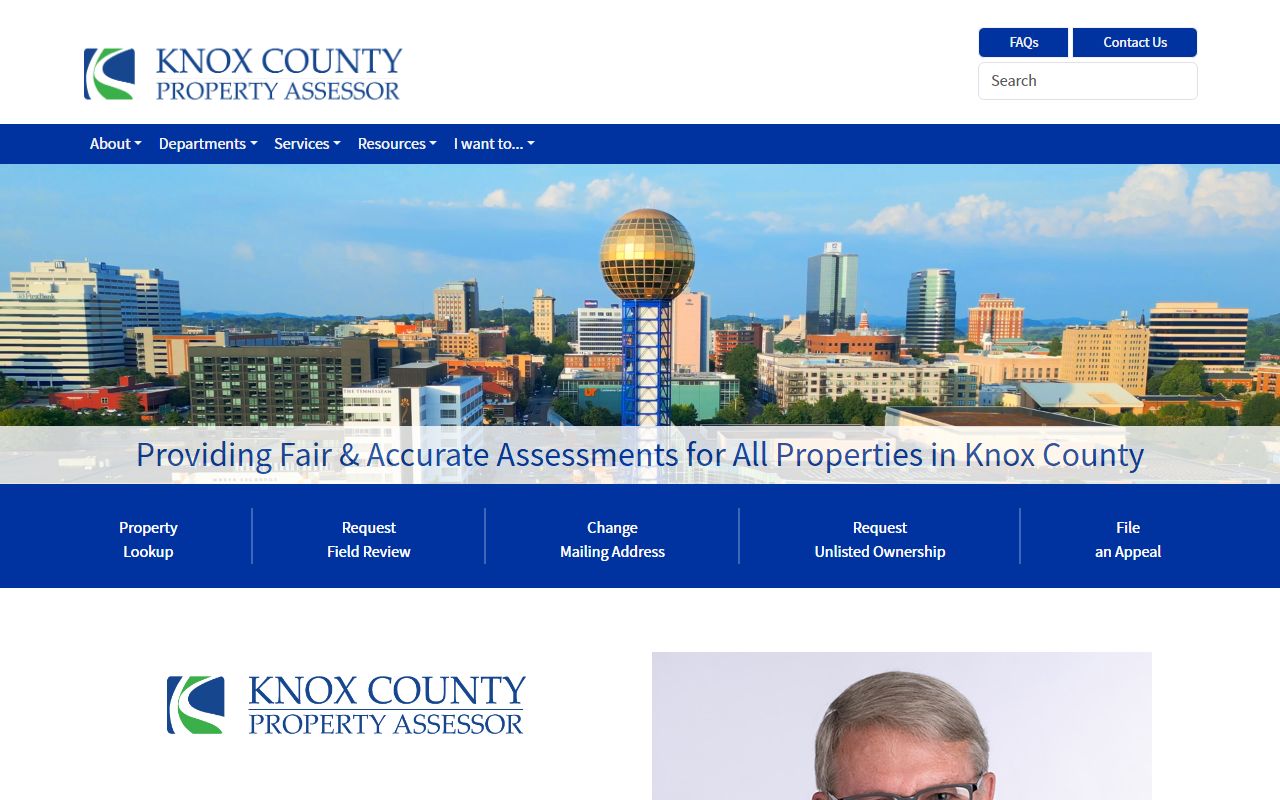
The assessor image belongs here because parcel and value work is the backbone of the Knox County property search process.
Knox County Assessment Records
Phil Ballard serves as Property Assessor, and the office sits in the Knoxville City-County Building at 400 Main Street, Knoxville, Tennessee 37902. The research notes phone number (865) 215-2360 for the main office and (865) 215-2362 for personal property assistance. Knox County also follows a four-year reappraisal cycle. Those details matter because Knox County Property Records on the assessor side are not just a static parcel card. They are part of a large, active county assessment system that changes on a schedule and supports both real and personal property work.
Because the county operates its own independent CAMA system, the assessor portal is the right local place to start when the question is about parcel identity, ownership display, classification, or current value. Knox County Property Records users should treat the assessor file as the working county view of the property. If a deed, tax notice, or map reference looks off, the assessor portal is often the fastest way to determine whether the issue is a county carrying problem or a misunderstanding about the parcel itself.
Tennessee's Division of Property Assessments explains the statewide framework behind local parcel work, and the assessment manuals explain the standards behind classification and appraisal practice. Those state materials support Knox County Property Records, but the local assessor system remains the actual working source for parcel details in Knoxville and the rest of the county.
Knox County Property Records And Deeds
The recorded side of Knox County Property Records belongs with the Register of Deeds at 400 Main Street, Room 225, in the City County Building. The research identifies Nick McBride as register, with phone number (865) 215-2330. The register portal says deed records are available from 1989 to the present, with 594,367 deed documents and 386,466 mortgage documents on record. That scale matters because the register site is a real county search tool, not just a contact page.
The register side is where Knox County Property Records shift from parcel and map context into actual filed instruments. If you need to verify a deed, confirm a mortgage filing, or compare the recorded transfer chain against the county parcel view, the register is the office that holds the controlling document trail. The research also notes that public terminals are available and certified copies cost $1 per page, which helps make the local access path more practical and specific than a generic county summary.
Open the register portal at knoxcounty.org/register when you need the recorded land-document side first.
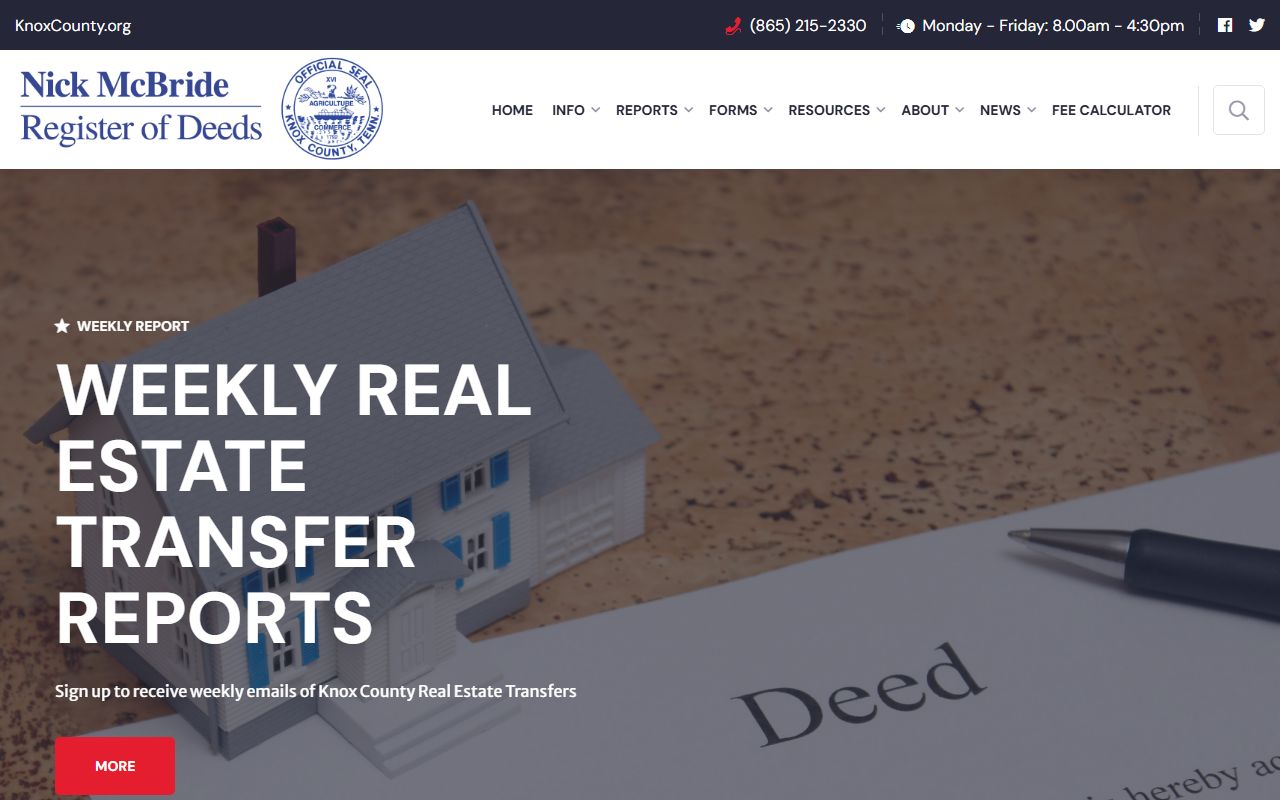
The register image belongs here because the deed and mortgage systems are central to how Knox County Property Records are actually retrieved.
For recorded transfers, Tennessee's real property transfer tax guidance explains the state framework behind many deed filings and helps connect the county recording process to the transfer paperwork that often accompanies a conveyance.
Knox County GIS And Tax Records
The KGIS mapping system adds another layer to Knox County Property Records by supporting search by address, parcel, owner, and place. The research says KGIS includes tax maps, property boundaries, aerial imagery, and multiple map layers. That makes it more than a simple locator. It is often the fastest way to confirm that the parcel you found in the assessor system is the same parcel shown in the deed history or tax account.
On the tax side, the trustee portal supports property tax searches by address, owner name, or parcel ID, and it provides an online payment path. The research also says the trustee portal includes tax sale information, exemptions, low-income assistance, and senior and veteran exemptions. That means Knox County Property Records users can move from the parcel file to the account side without leaving the county's own systems.
Check the county GIS resource at KGIS when a map layer or tract shape matters.
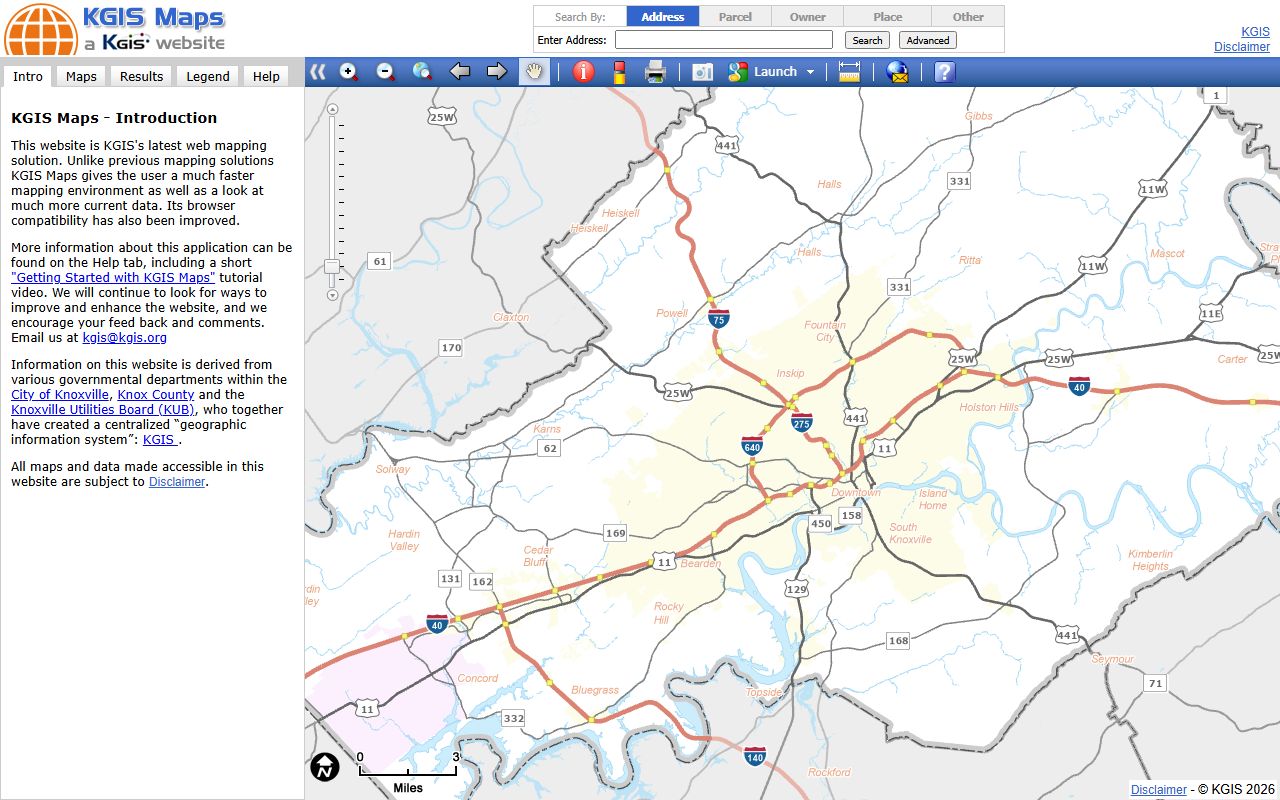
The GIS image belongs here because KGIS is one of the county's most useful tools for lining up parcel, map, and tax details.
When the issue is on the tax-account side, move to the trustee portal and compare the bill with the assessor parcel and the KGIS tract before assuming the underlying property record is wrong.
Open the trustee resource at knoxcounty.org/trustee if the question is a bill, payment, or exemption issue.
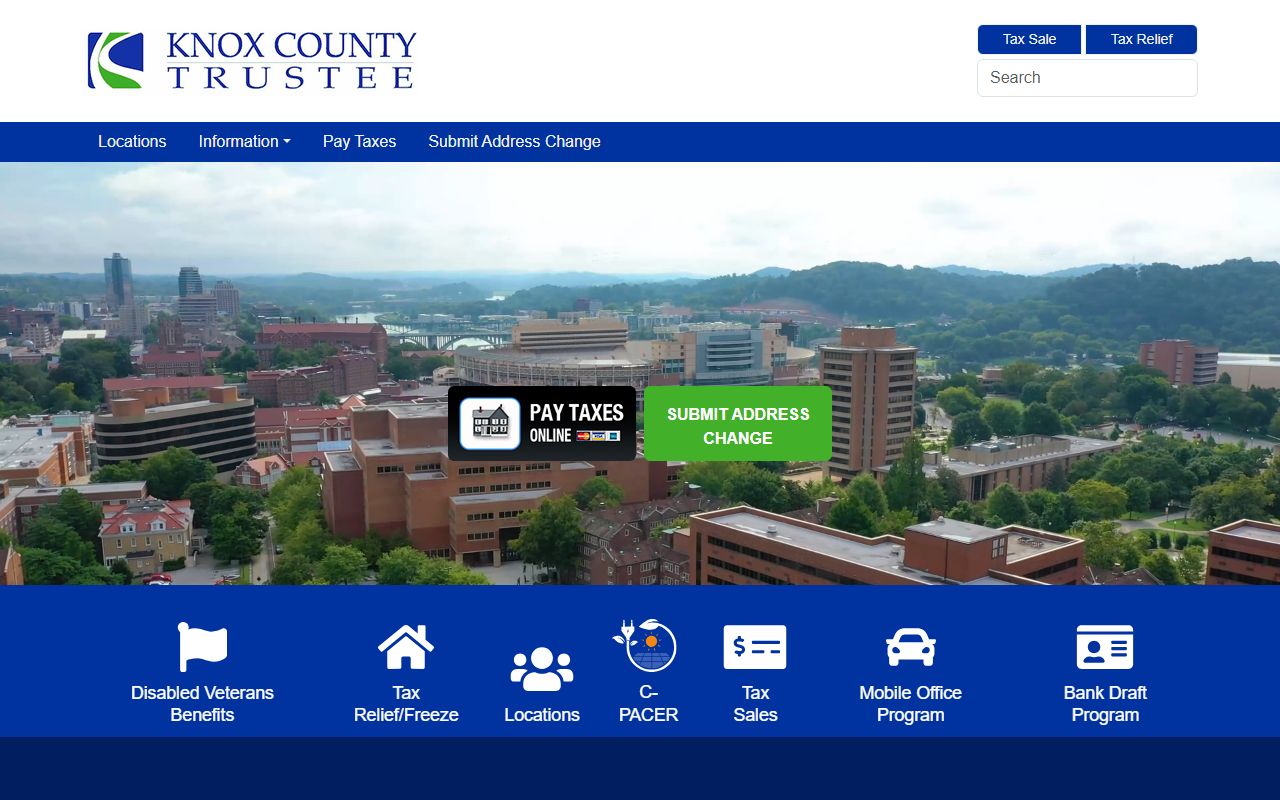
The trustee image fits here because the tax-account search is a major part of the local Knox County workflow.
Knox County Property Records Appeals
If a value, classification, or parcel detail looks wrong, the appeal path begins locally and can move to the Tennessee State Board of Equalization. The value appeals guide explains the filing window that usually depends on August 1 or 45 days after local board action notice. That deadline matters because Knox County Property Records users often have enough local data to build a strong file quickly, but timing still controls whether the appeal is allowed.
A solid appeal file in Knox County usually draws from several county systems at once. The assessor portal gives the parcel and value data. KGIS gives the tract and map context. The trustee portal confirms whether the tax side matches the parcel. Once those pieces line up, the appeal becomes much easier to explain. Knox County Property Records are strong enough locally that most factual questions can be organized before a state filing is even considered.
Tennessee's property tax relief and property tax programs pages also matter here when the issue is on the account side rather than the value side. They do not change title, but they can affect how the tax record is read for a qualifying owner.
Knox County Property Records Access
Most Knox County Property Records requests should stay within the county's local systems before turning to any state request. Start with the assessor for parcel and value work. Use the register for recorded documents. Use KGIS for tract and map context. Use the trustee for bills, payments, and exemption programs. That order works because Knox County has a deeper local tool set than many smaller counties.
If the file you need is held by Tennessee rather than Knox County, the Comptroller public records request page is the right route for state-held materials. That matters for assessment guidance and records that do not sit in the county's local systems. Knox County Property Records are easiest to use when the local office search is exhausted first and state requests are used only for state-held files.
More County Pages
If you need another county after reviewing Knox County Property Records, use the live county pages below. Each page follows the same structure but stays tied to its own local offices and record trail.