
Search Davidson County Property Records
Davidson County property records combine parcel assessment data, recorded land documents, and local tax details for Nashville and the rest of the county. A Davidson County search often starts with the assessor because Davidson runs its own independent CAMA system rather than the statewide TPAD records view used by many other Tennessee counties. From there, you can move to deed and lien records, tax statements, and appeal information. This page gathers the main Davidson County property records sources so you can search current parcel facts, review recorded documents, and track deadlines tied to tax and assessment records.
Davidson County Property Records Facts
Davidson County Property Records Search
Davidson County property records are centered on the Property Assessor of Nashville and Davidson County. The county research notes that Davidson uses its own CAMA system, so many people should search there instead of assuming that the statewide TPAD portal will hold the full parcel data. The assessor office is listed at 700 President Ronald Reagan Way, Suite 210, Nashville, Tennessee 37210, with Monday through Friday hours from 8:00 a.m. to 4:30 p.m. The office tracks real property and business personal property, and it gives Davidson County users a direct route to parcel-level information.
The extended Davidson County research adds more depth. It identifies Assessor Vivian M. Wilhoite and notes a large parcel base, including 244,187 taxable parcels, 199,577 residential properties, and multiple classifications such as residential, commercial, industrial, apartment, and farm. That matters because Davidson County property records searches can branch by property class as well as by owner or address. The same research also says annual reappraisals are required by Tennessee law, and that real property assessment appeals at the local level use a March 15 deadline marker on the assessor side. That is a local feature worth checking before value challenges.
See the Davidson County assessor portal before anything else if your goal is to confirm parcel identity, classification, or assessed value.

The assessor portal is the strongest starting point because Davidson County property records are not handled through the same statewide assessment path used in many other Tennessee counties.
Davidson County Deed Records
Once the parcel is identified, Davidson County property records often shift to deed and recording research. The extended research points to the Register of Deeds material for Middle Tennessee registers, which notes electronic and paper records, online search access through Metro resources, and document types such as deeds, mortgages, liens, plats, powers of attorney, and UCC filings. It also mentions that military discharges are recorded confidentially. That mix matters because recorded property records in Davidson County are broader than deed transfers alone.
The Davidson County research also cites high-authority data portals that describe copy costs and search coverage. Those sources report non-certified copies at fifty cents per page, certified copies at one dollar per page, and searchable document coverage reaching from the 1980s forward. I am treating those pages as support rather than the main authority, but they help explain how people usually access Davidson County property records once they move past the parcel card and into recorded instruments.
Use the county-facing Register of Deeds resource when you need recorded document context. Use the assessor first, then move to recorded land records once you have the owner name, parcel number, or address pinned down.
Review the CTAS directory for statewide recording cost context while you work through Davidson County copies and certifications.
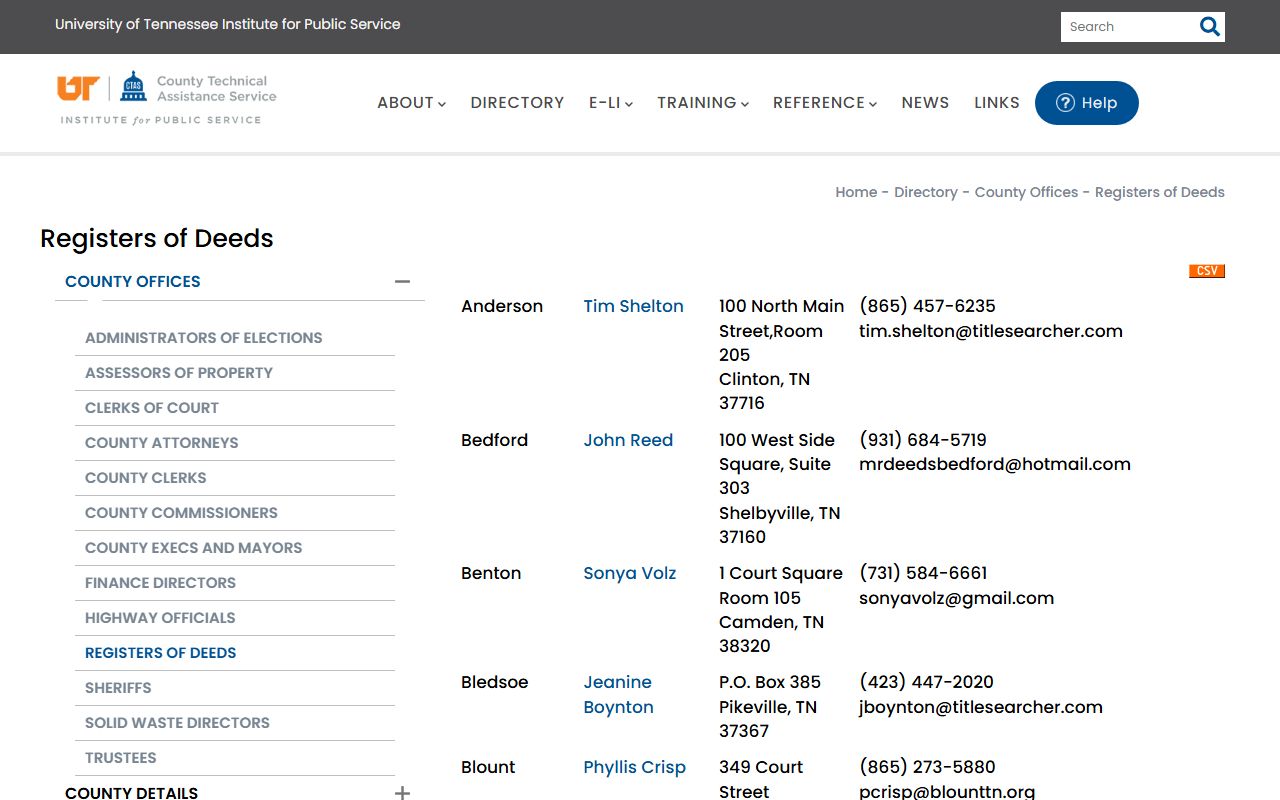
The statewide directory helps because Davidson County property records requests often involve both local Metro search tools and Tennessee-wide recording rules on fees and taxes.
Davidson County Property Taxes
The trustee side of Davidson County property records is just as important as the assessor side. The official Nashville real property taxes page says statements are mailed in the first week of October each year. The extended research adds that the local tax collection period runs from October through February, that partial payments are allowed during the collection period, and that interest of 1.5 percent is added on March 1. It also notes that more than half of Metro Government operating revenue comes from property taxes, which explains why trustee records and deadlines are handled with tight timing.
Davidson County property records users should also note the assessment ratios repeated in both the county and city research. Residential property is assessed at 25 percent of appraised value, while commercial property is assessed at 40 percent. Those ratios help you read tax material correctly when you compare an appraised figure to a tax bill or trustee notice. The trustee page also points users to online payment options, making it easier to connect a parcel search to live tax account handling.
See the Metro trustee tax page before payment, delinquency, or bill questions.
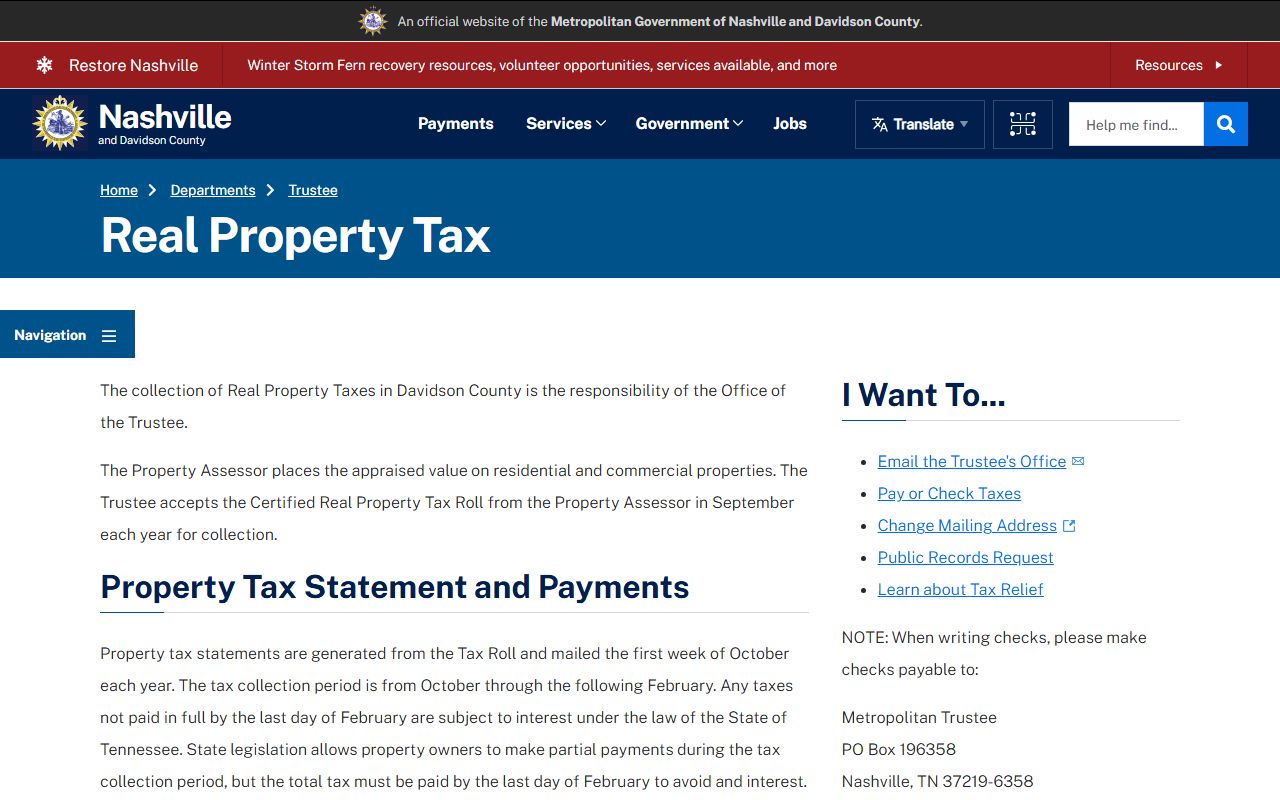
That page helps tie Davidson County property records to actual payment windows, penalty dates, and local tax administration.
Note: A parcel record, a tax statement, and a recorded deed each answer a different question in Davidson County property records, so it helps to know which office controls which record before you call or visit.
Davidson County Property Records Appeals
Assessment review in Davidson County still connects back to the broader Tennessee appeal system. The local research says the assessor handles real property assessment appeals with a March 15 deadline marker, while the Tennessee state materials explain the next steps after local review. The State Board of Equalization and the related value appeals page state that a property owner generally goes to the county board first, then to the state board, with an August 1 tax-year deadline or 45 days from notice of local board action, whichever is later.
Davidson County property records are useful in that process because the parcel data, class, land details, improvement data, and prior notices all support an evidence-based appeal. Tennessee also requires assessors to send change notices before local board sessions begin. If the dispute is really about a tax assistance program rather than a value number, the state property tax relief and tax program pages explain the relief and freeze options that local offices administer.
Davidson County property records searches tied to appeals should keep the parcel card, tax statement, and notice together. That keeps the local and state review path much easier to follow.
Davidson County Property Records History
Not every Davidson County property records request is about a current tax bill. Some are historical. When the county search tools do not go back far enough, the Tennessee State Library and Archives becomes important. The archives hold original warrants, surveys, grants, and other historical land materials, which can help when you are tracing land before a modern parcel system or before online deed indexing reaches back far enough.
The general Tennessee research also helps explain deed recording rules that shape modern land records. The Department of Revenue says deeds require an affidavit of consideration to be recordable, and the real property transfer tax page explains the state transfer tax rate of $0.37 per $100 of consideration or value. Davidson County property records research often makes more sense when you connect the county recording path to those state recording rules.
Use the state archives when the Davidson County property records question turns into a land-history question, especially for older ownership chains or grant-era material.

The archives page is not a substitute for local records, but it gives Davidson County users a practical next step when the county portal does not reach the period they need.
Davidson County Property Records Access
Most Davidson County property records can be reached through the assessor, trustee, and recording offices without filing a formal state-level request. Still, the Tennessee Comptroller public records requests page is useful when you need state-held assessment materials, manuals, or related records. That page also explains the Tennessee citizenship rule tied to public records access for those state-held materials.
The county and city research also points to the Secretary of State business search as a useful support tool when a parcel owner is an LLC or corporation. Davidson County property records often list business entities rather than individuals. Checking the business search can help identify the legal owner behind a deed or assessment record before you order copies or contact the register.
If your Davidson County property records search begins in Nashville, you can also move to the city-facing page below for a more local view tied to the county system.
Cities In Davidson County
Nashville is the main local page tied to Davidson County property records on this site. Because Nashville is the county seat and the largest city in the county, many local searches start there even though the property records themselves remain county-controlled.
Use the Nashville page if you want a city-facing version of the same Davidson County property records system.
Nearby Counties
Property searches near Nashville can cross county lines fast. If a parcel is outside Davidson County, use the county pages for the correct jurisdiction before relying on a recorded owner name, deed reference, or tax account.