
Search Williamson County Property Records
Williamson County Property Records are centered in Franklin, where the register of deeds, county tax systems, and county property offices support one of the busier property workflows in Tennessee. If you are trying to obtain a deed, connect a recorded transfer to a tax account, or understand which county system carries the parcel after a sale, the best starting point is the office or portal that actually maintains that part of the file. This page brings the main Williamson County Property Records routes together so the search stays tied to Franklin and stays focused on the local systems that control the record.
Williamson County Property Records Facts
Williamson County Property Records Search
The key starting point for Williamson County Property Records in the research set is the CTAS register directory at ctas.tennessee.edu/registers-of-deeds. That directory identifies Sherry Anderson as register of deeds, gives phone number (615) 790-5706, and lists the county email as sherry.anderson@williamsoncounty-tn.gov. The research also notes that Williamson County is a high-volume recording office and supports e-recording. Those details matter because they show the county’s property-record system is built to handle a steady flow of land-document work rather than occasional filings only.
The same research makes another important point: Williamson County operates an independent CAMA system. That means Williamson County Property Records should not be framed around TPAD as the working local route. The manifest marks TPAD as failed here as well, so the safer approach is to keep the county page grounded in the Franklin register office, the county tax portal, and Tennessee support pages that explain parcel and tax structure without pretending TPAD is the county’s active local tool.
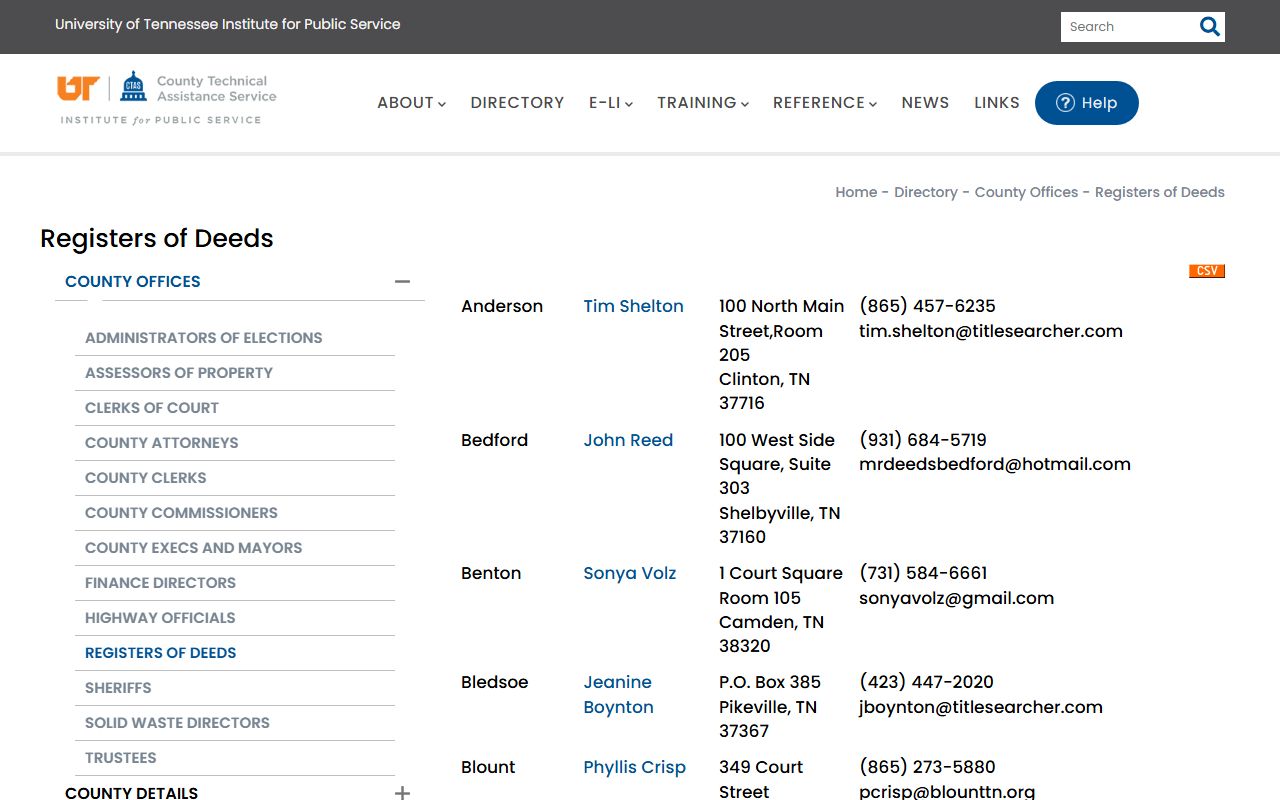
The register directory image fits this page because the county’s recording office is one of the strongest local anchors for Williamson County Property Records in the research set.
Williamson County Property Records And Taxes
The most practical county portal in the Williamson research is the tax site at williamsonpropertytax.com. That portal allows users to search and pay taxes online, review general information, check payment options, and read about tax relief, tax freeze, and Grassland sewer assessment information. Those details matter because many Williamson County Property Records questions do not stop with the deed. They move into a tax account, a payment issue, or a question about how the county is carrying a parcel after a transfer.
The tax portal does not replace the register office. It complements it. The register tells you what was recorded. The tax side helps you see how the county is carrying the account and what programs or payment structures may apply. Williamson County Property Records are easier to understand when those two systems are used together instead of being treated like one all-purpose database.
That split is especially useful in Franklin because the county’s property activity is heavy enough that a user may need to move between recorded documents, tax account details, and county parcel support during the same search. A deed alone may not answer a current account question. A tax portal result alone may not explain the recorded transfer. The search works better when both are compared in sequence.
Williamson County Assessment Records
Assessment records are still part of Williamson County Property Records, but the page needs to respect the county’s independent CAMA note. Tennessee’s assessment viewer remains useful as state support when you need to cross-check parcel context, and the state Division of Property Assessments plus the assessment schedule explain how the broader statewide system works. Even so, Williamson County Property Records should stay tied to county systems first because the county’s own setup is not meant to be presented as a TPAD workflow.
That matters in practice. If the search starts with a parcel or tax question, the county tax portal is usually the better first stop. If it starts with a recorded transfer, the register remains the right anchor. The state pages help provide context for valuation and timing, but they do not replace the Franklin county systems that carry the actual local file.
The safest pattern is to separate the record types long enough to see what each system is answering. One system shows the recorded instrument. Another shows the active county tax and parcel side. Keeping them separate at first usually makes the county record easier to read.
Franklin Property Records Access
Franklin is the practical center of Williamson County Property Records access because the county seat anchors the register office and the county property workflow. A useful request usually starts with the most specific detail you know, such as an owner name, parcel clue, transfer date, or tax account information. County offices can answer focused questions more effectively than broad requests for every possible record tied to a tract or owner family.
The Franklin-centered structure is also why the high-volume recording note matters. Williamson County Property Records move through a busy county office, and that makes clear organization more important. Use the register for deeds and recorded instruments. Use the tax portal for active account details, payment options, and program information. If a question is really about a Tennessee-held file rather than a county-held one, the Comptroller’s public records requests page is the proper state route.
A practical workflow is simple. Start with the register side when the question is about a recorded transfer. Start with the tax side when the question is about a current account. Then compare the results before deciding whether the next step belongs with a county office or with a state assessment resource.
Williamson County Property Records Appeals
When a property issue shifts into valuation review, the appeal side of Williamson County Property Records moves beyond the deed or tax portal alone. Tennessee’s State Board of Equalization and the value appeals guide explain how owners challenge value decisions after local review. Those pages matter when the dispute is over assessed value instead of over whether an instrument was recorded.
The tax side can also connect to the same county portal sections on relief and tax freeze, plus Tennessee’s property tax relief and property tax programs pages. Those resources help explain possible tax outcomes, but they do not replace the underlying county record.
The best approach is to keep the file sorted by function. Stay with the register for recorded instruments. Stay with the county tax side for current account information. Move into state appeal pages only when the issue is truly about value review. That structure keeps Williamson County Property Records from being flattened into one generic search process.
More County Pages
If you need another county after reviewing Williamson County Property Records, use the live county pages below. Each page follows the same structure but stays tied to its own local offices and record trail.