
Search Stewart County Property Records
Stewart County Property Records are centered in Dover, where the courthouse and county offices on Donelson Parkway handle the local trail for deeds, parcel data, assessment files, and related public record requests. If you are matching an address to an owner name, tracing a recorded transfer, or trying to figure out which office keeps the record you need, the safest move is to start with the office that actually maintains that file. In Stewart County, that means the assessor, register, county clerk, trustee, and circuit court clerk all matter in different ways. This guide brings those routes together so the search stays local, practical, and tied to the right public records source.
Stewart County Property Records Facts
Stewart County Property Records Search
The county directory at CTAS Stewart County is a good starting point because it ties the local office structure to the county seat in Dover. That directory is useful when you need to confirm which office handles the record trail you are following. For Stewart County Property Records, the key offices are the assessor for parcel and valuation details, the register for recorded instruments, the county clerk and trustee for tax-related support, and the circuit court clerk when a court filing affects the parcel history.
If you already have a name, a deed reference, or a parcel number, begin with the office that matches the clue instead of trying to search every county file at once. The assessor and register usually answer the fastest when the request is narrow and specific. County Mayor Robin F. Brandon, Assessor Teresa Colley, Register Derek Earhart, County Clerk Sue J. Hennings, Trustee Sarah Roberts, and Circuit Court Clerk Tim Sammons are the office names in the research notes, and they show how many different pieces can touch a single Stewart County property file. A clean search starts when you know which office created the record and which office simply copies or stores it.
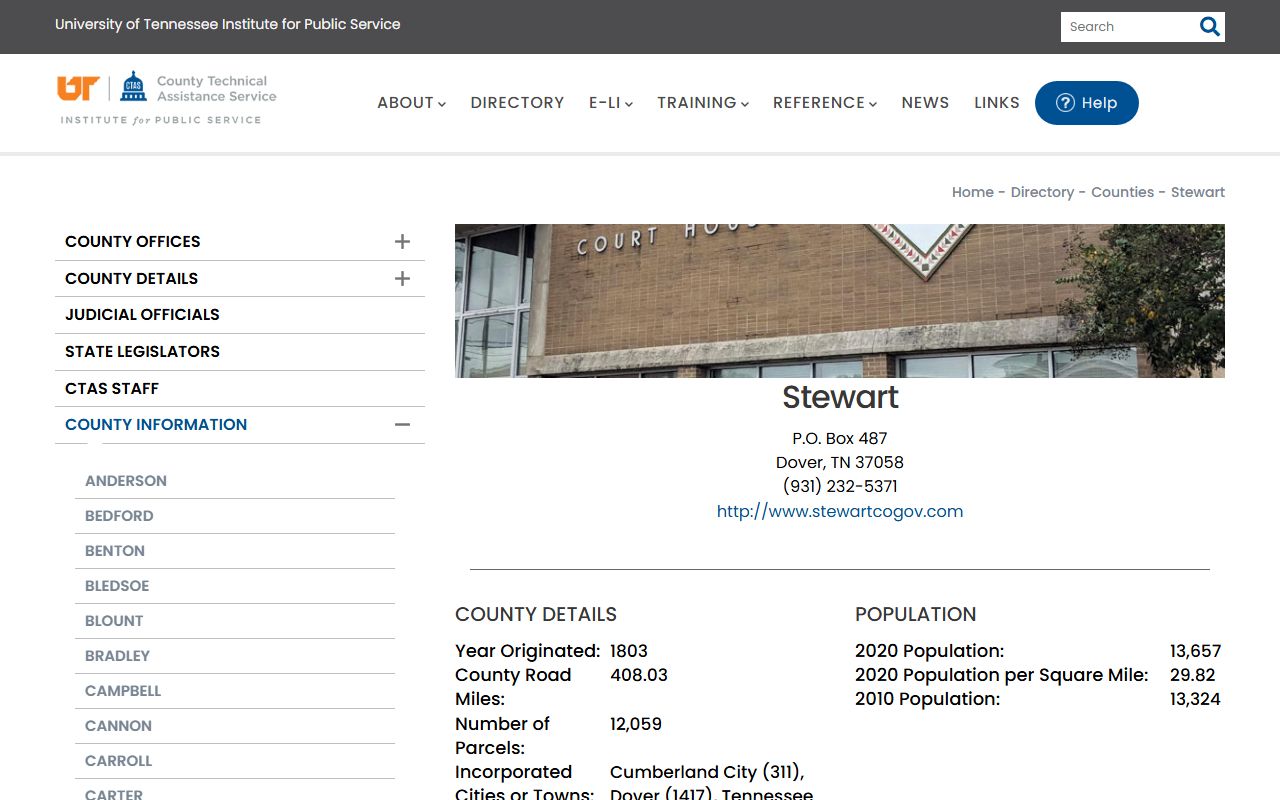
CTAS is a practical reference because it helps orient a parcel search before you move into the county's own files and requests.
Stewart County Property Records And Deeds
The recorded-document side of Stewart County Property Records belongs with the Stewart County Register of Deeds. The county office is at 225 Donelson Parkway in Dover, and the register line in the research notes is 931-232-5990. That office is the right place when you need a deed, a deed of trust, a release, or another recorded instrument that sits in the county book and page trail. If you know the grantor and grantee names, the search is usually much cleaner, because recorded documents are indexed by the names on the filing rather than by a street address alone.
The register office is especially helpful when a property changes hands more than once and the current deed does not tell the whole story. Start with the newest transfer, then walk backward through the recorded chain until the ownership trail makes sense. When a parcel has a long history, the deed book is often the clearest way to see how Stewart County Property Records evolved from one owner to the next. If you need extra context for the transfer paperwork itself, Tennessee's real property transfer tax page is a useful companion because it explains the state-side transfer reference that often accompanies a recorded deed.
The county register is also a good reminder that the file you need may be recorded but not explained. A deed can show a transfer, but it may not explain a family arrangement, a refinance, or a court-driven change in ownership. In those cases the register gives you the document, while the rest of the explanation may live with the county clerk, circuit court clerk, or another local office. That is why Stewart County Property Records searches work best when the document type is identified before the request is made.
Stewart County Assessment Records
Assessment work is the other half of Stewart County Property Records, and it usually starts with the assessor rather than the register. The Stewart County Property Assessor office is on the first floor at 225 Donelson Parkway in Dover, and the research notes list 931-232-5252 as the main assessor number. That office is the best starting point when you need parcel information, property classification, or help matching an address to the correct owner record. The assessor is also the place to check when a deed and a tax record do not line up the way you expected.
Tennessee's property assessment viewer is a useful statewide support tool because it helps you see the parcel in map form before you call the county office. The Comptroller's Property Assessments page explains the statewide assessment structure, while the assessment schedule shows the regular calendar behind the process. Those references do not replace the local file in Dover, but they do help you read the local file with the right framework in mind. That is especially useful when a parcel has changed use, split, merged, or received a new improvement value.
The assessor file is also the place to reconcile an address search. If you only know where a property sits and not how the county indexed it, the parcel card and map are usually the fastest way to locate the correct record. Once the parcel is identified, the deed and tax trail become much easier to follow. In Stewart County Property Records work, that sequence often saves more time than starting with a broad deed search and hoping the right address shows up later.
Dover Property Records Access
Dover is the practical center of Stewart County Property Records access because the main offices sit close together and the courthouse is where many related files converge. The County Clerk, Trustee, and Circuit Court Clerk each touch different parts of the broader property trail, especially when a transfer, payment history, or court filing affects what shows up in a search. If you are not sure which office has the file, the county's records request page is the local fallback that tells you how the county routes public requests.
The records request page is important because it keeps the search grounded in the office that actually controls the file. When a document belongs to the assessor or register, that office is still the best place to start. When the record sits in another department, the county request process helps you avoid making the wrong office do the work of the right one. Stewart County's public records page also points requestors toward the county mayor's office when a request needs a broader administrative route, which makes sense because Robin F. Brandon is the county mayor named in the research notes and the mayor's office often helps direct the flow of county information.
For Stewart County Property Records users, the practical lesson is simple. Use the office that created the record first, then use the county request process only when you need a copy or need help locating the custodian. A narrow request with a name, date range, parcel number, or document type usually travels faster than a general search for every file tied to a property. That is true for deeds, tax entries, and courthouse papers alike.
Stewart County Property Records Appeals
When a parcel dispute turns into a value dispute, Stewart County Property Records connect to the state appeal process. The Tennessee State Board of Equalization explains the state review structure, and the value appeals guide shows how the filing window works. That guide is useful because it reminds property owners to keep the notice date, parcel number, and local board information together before filing. The appeal process is not about guessing at the right number. It is about showing why the county record no longer fits the property as it exists now.
In practice, the best appeal file starts with the assessor record and then adds facts that support the change. Recent sales, photos, a corrected parcel description, or a change in property use can all matter, but the local record still needs to be the anchor. That is why the assessor office in Dover is the first stop before any state appeal. Once the county file is clear, the state review is easier to understand because the issue can be framed as a record question rather than a general disagreement.
Stewart County Property Records appeals also benefit from a disciplined timeline. If you receive notice from the county, keep it with the parcel card and the tax bill so the filing deadline does not get lost in the paperwork. The local and state pages work together here, with the county office supplying the data and the state board handling the review when the local process is not enough.
Stewart County Property Records And Tax Support
Property records often overlap with tax support, so Stewart County owners may also need the Comptroller's public records requests page, property tax relief, and property tax programs. The public records page is the state route when a file is held outside the county, while the relief and program pages explain the homeowner support side of the tax record. Those pages are especially helpful for qualifying homeowners who need to understand why a bill, freeze, or relief entry looks different from the deed trail.
Those tax resources do not replace Stewart County Property Records, but they help explain the parts of the property file that are not deed books or parcel cards. A homeowner may see a recorded transfer, a tax bill, and a relief program notice all in the same year, and each record serves a different purpose. The key is to match the question to the source. Ownership questions go to the register. Parcel questions go to the assessor. Tax support questions go to the county and state pages that explain the program. Keeping those roles separate makes the search easier to read and easier to trust.
If the issue involves a recent transfer, it is also smart to compare the county deed trail with the state transfer tax reference and the assessor record. That cross-check helps catch a missing page, an outdated owner name, or a parcel split that changed the way the property should appear in the county file. Stewart County Property Records are most useful when each office is read in context rather than as a standalone answer.
More County Pages
If you need another county after reviewing Stewart County Property Records, use the live county pages below. Each page follows the same structure but stays tied to its own local offices and record trail.