
Search Monroe County Property Records
Monroe County Property Records are centered in Madisonville, where the register of deeds and assessment resources give the local record trail its shape. If you need to confirm a deed, trace a deed of trust, review a lease or contract filing, or compare a property valuation record to a parcel description, the right starting point is the office that actually maintains that part of the file. Monroe County Property Records are easiest to use when recorded documents and valuation records stay separate in your mind, because each office answers a different question and each one can help narrow the search in a different way.
Monroe County Property Records Facts
Monroe County Property Records Search
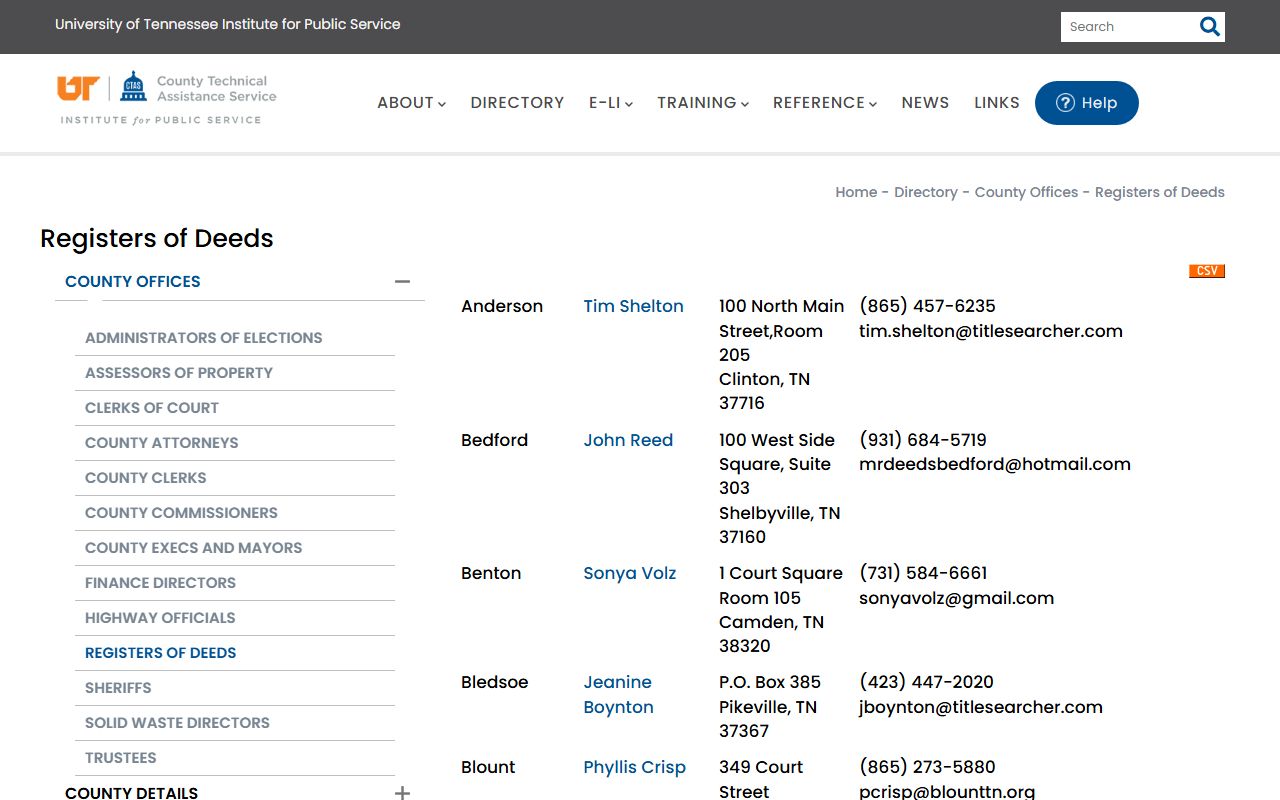
The clearest local reference for Monroe County Property Records is the CTAS register of deeds profile at ctas.tennessee.edu/registers-of-deeds. CTAS lists Kimberly Bivens as the Monroe County Register of Deeds and places the office at 103 College Street, Suite 4, Madisonville, TN 37354, with phone (423) 442-2440 and email kim.bivens@monroetn.gov. The office records real estate conveyances, deeds of trust, leases, and contracts, so it is the best place to begin when a Monroe County Property Records search needs the recorded-document trail instead of a generic county directory.
The county seat matters because it tells you where the local office work is centered. In Monroe County, that means Madisonville is the practical starting point for Property Records questions that involve a recorded instrument, a copy request, or a parcel search that needs a filing reference. Once you know which office holds the file, you can move from a broad property question into the specific document type that answers it. That is especially useful when the same parcel appears in more than one record set and you need to know whether the issue belongs with the register or with the assessor.
The Monroe County image works as a quick visual anchor for the local record trail, but the actual search path still runs through the office that keeps the file you need. For title-side questions that means the register of deeds. For value-side questions it means the assessor. Keeping that distinction clear makes Monroe County Property Records much easier to read, especially when one document points to another and the answer is split across offices.
Monroe County Property Records and Assessment
The assessor's office maintains property valuation records, so it is the office to use when Monroe County Property Records questions turn into questions about value, classification, or parcel identity. A deed may show how a transfer was recorded, but the assessor's record is what tells you how the county carries the property for valuation purposes. When a street address, owner name, or parcel clue does not line up cleanly with the deed, the assessor file is the place to compare the county's current property valuation record with the rest of the search trail.
Tennessee's Division of Property Assessments provides the statewide framework behind that work, and the assessment schedule explains the general timing of the appraisal cycle. Those pages are useful because they show how local assessment records fit into the larger state system, but they do not replace the county file. For a Monroe County Property Records search, the county assessment record is still the live source for parcel-level context.
The state's assessment and GIS portal is also helpful when you want a visual cross-check for parcel location or map context. That support is especially useful when a local search is incomplete or when you need a wider geographic view before asking the county to clarify a record. In practice, Monroe County Property Records work best when the assessor, the map, and the recorded document are compared together instead of being treated as interchangeable copies of the same information.
Monroe County Property Records and Deeds
On the recorded-document side, Monroe County Property Records belong with the Register of Deeds in Madisonville. CTAS identifies the office as the place for real estate conveyances, deeds of trust, leases, and contracts, which means it is the source for the legal instrument trail that follows a transfer or encumbrance. If you need to confirm how a deed was indexed, whether a contract was recorded, or what filing name appears in the county book, the register's office is the local authority that controls that part of the record.
That office detail matters because a recorded deed and a property valuation record answer different questions. The deed shows the transaction or instrument that was filed. The assessor shows how the property is carried for valuation. When you are comparing the two, it helps to read the legal description, the names on the instrument, and the parcel context together so you can see whether the same property is being described in both places. That is the most reliable way to keep Monroe County Property Records from becoming a guess about which source is correct.
For transfer paperwork, the Tennessee Department of Revenue's real property transfer tax guidance explains the state-side form trail that often accompanies a recorded conveyance. It does not replace the county record book, but it is useful when you want to understand why a deed packet may include transfer documents or supporting paperwork. In a Monroe County Property Records search, the county office still performs the recording step, while the state guidance helps you interpret the paperwork around it.
Madisonville Property Records Access
Madisonville is the county seat, so it is the natural center for Monroe County Property Records requests that start with a name, address, or parcel number and then need a local office answer. If you are asking for a copy, inspection, or filing reference, the register of deeds is the office for the recorded side of the file, and the assessor is the office for property valuation records. The register contact information from CTAS, including the office address, phone number, and email, gives you a direct route to the local records holder without relying on a generic statewide directory.
When a question falls outside the county's own file, Tennessee's public records requests page is the correct state backup for records held by the Comptroller's office. That page is most useful when the search has moved from the courthouse record to a state-held support document, a statewide assessment reference, or another file that is not maintained in Madisonville. The point is not to replace county access, but to keep the request pointed at the office that actually controls the record.
County access is usually fastest when the request is specific. A parcel number, recorded instrument type, owner name, or street address gives the register or assessor a much better starting point than a broad request for all Monroe County Property Records on a subject. That specificity saves time and helps the office decide whether the answer should come from the deed book, the valuation record, or a related filing that sits in the same chain.
Monroe County Property Records Appeals
If the dispute is about value rather than title, the appeal path begins with the local assessment file and can move to the Tennessee State Board of Equalization. The Board's value appeals guide explains the filing window and why the date on the local notice matters. For Monroe County Property Records, that means the appraisal record, the notice, and any comparison data should be kept together before the appeal clock runs out, because the record that triggered the question is often the same record that supports the answer.
The appeal process is easier to manage when you keep the county and state roles separate. The assessor maintains the property valuation record. The local board reviews the challenge. The state board handles later review if the case moves that far. Reading Monroe County Property Records in that order keeps the issue focused on value instead of drifting into ownership, payment, or recording questions that belong to another office.
The Comptroller's Property Tax Relief page and Property Tax Programs page are also worth checking when the tax side of a property file needs context. Those resources explain state programs that may affect eligible owners, but they do not change the recorded deed or the basic structure of Monroe County Property Records. They are support material for the tax side, not a substitute for the county valuation record.
Tennessee State Support
When Monroe County Property Records move beyond the county office file, Tennessee state support provides the wider framework for assessment, appeals, and public-records access. The Comptroller's property assessments page explains the state program behind county valuation work, while TNMap assessment gives a statewide GIS reference that can help confirm parcel context. Those tools are especially useful when a local record is incomplete, a parcel has changed shape, or you need a broader geographic check before asking the county for clarification.
The state resources also help when a Monroe County Property Records question is really about process. The assessment schedule helps explain timing, the value appeals guide explains the appeal sequence, and the public records requests page explains how to reach the Comptroller for records that are not part of the county file. Together, those pages give Monroe County researchers a clean second step when the local office has already answered everything it can.
More County Pages
If you need another county after reviewing Monroe County Property Records, use the live county pages below. Each page follows the same structure but stays tied to its own local offices and record trail.