
Search Meigs County Property Records
Meigs County Property Records are centered in Decatur, where the courthouse directory, the assessor, and the register of deeds give you the local path for parcels, ownership, and recorded land documents. If you are checking a deed, matching a parcel, reviewing a tax-map clue, or trying to find the right office for a county record, the best approach is to start with the county departments page and the state assessment map rather than a generic search. This guide keeps Meigs County Property Records tied to the offices that actually maintain the files and the historical context that shapes them.
Meigs County Property Records Facts
Search Meigs County Property Records
The county departments page at meigscounty.org/directory/departments is the clearest starting point for Meigs County Property Records because it places the Assessor of Property and the Register of Deeds inside the same local government directory. The assessor office is listed at 17214 TN-58, Suite 101 in Decatur with phone number 423-334-5231, and the register office is listed at the same courthouse address in Suite 104 with phone number 423-334-5228. That structure makes it easier to decide whether your question belongs with the parcel file or the recorded instrument file before you call or visit.
The register side of Meigs County Property Records covers the documents that matter most in a land search, including warranty deeds, deeds of trust, liens, leases, plats, and mortgages. That mix is important because ownership, financing, and property layout are often split across several recorded instruments instead of sitting in one single file. The county research also notes courthouse fires in 1904 and 1964 that affected some historical records, while surviving documents date back to the late 1800s. That history is a reminder to verify older chains carefully instead of assuming every earlier transfer survived in the same index form.
Online access is available through the U.S. Title Search platform, but the access is subscription-based, so the courthouse file remains the controlling source when you need certainty. The online index can still be useful for a quick name check or to see whether a deed book entry exists, but it does not replace the county record when the question is a certified copy, a boundary note, or a record that may have been affected by the historic fire losses.
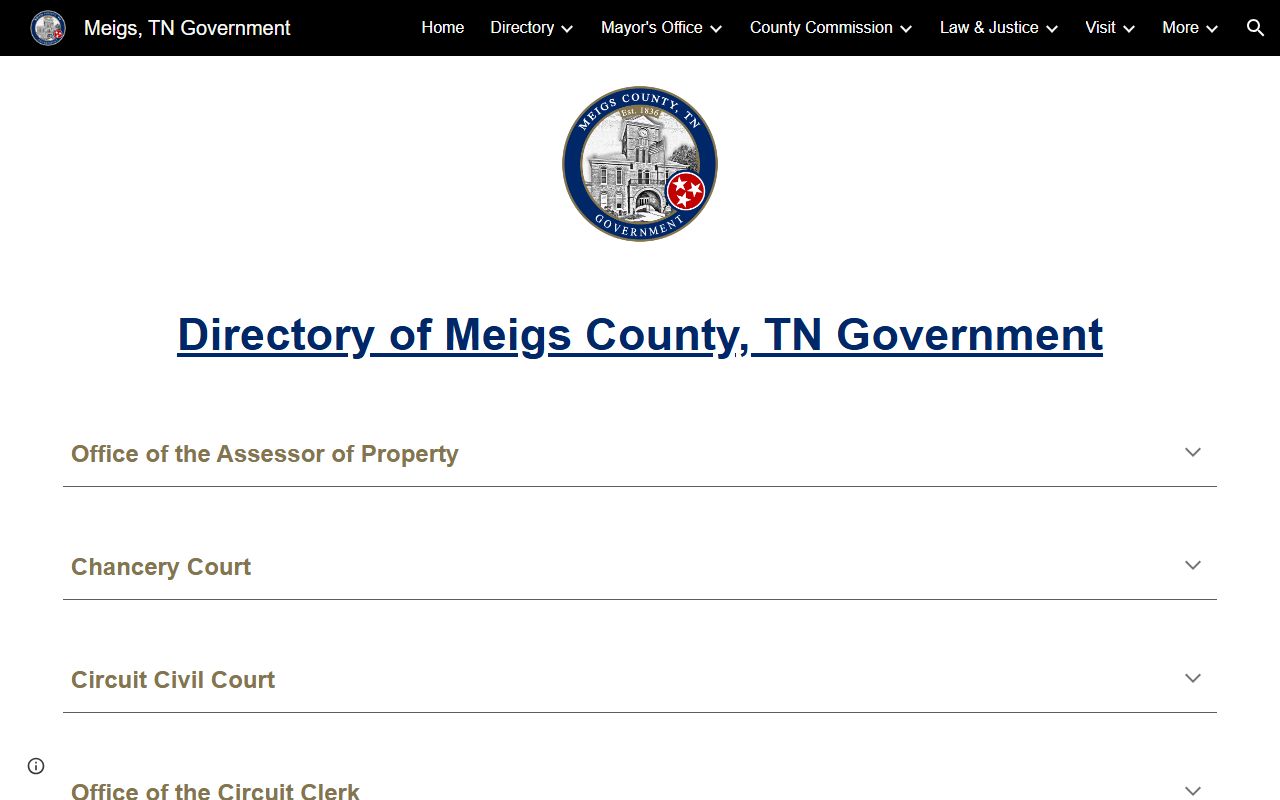
The county directory image reinforces the local starting point and the courthouse-centered path for Meigs County Property Records in Decatur.
Meigs County Assessment Records
The state parcel map at tnmap.tn.gov/assessment is the best public cross-check for Meigs County Property Records when the question is about a parcel ID, owner name, or property address. The system provides property boundaries and assessment information and is integrated with county assessor records, which makes it useful for confirming that you have the right tract before you compare a deed or tax account. Because access is free, it is often the fastest way to see how a parcel is currently carried in the public assessment view.
Meigs County reports 9,582 total parcels, with 8,170 residential parcels and 210 commercial parcels. That mix matters because similar owner names and road addresses can show up more than once, especially in a county where land use ranges from residential tracts to larger rural parcels. A parcel ID or a precise property address can narrow the search much faster than a broad name query, and the county assessor is the office that can help explain why a tract appears the way it does on the local roll. The assessor phone number, 423-334-5231, is the practical contact if a boundary, classification, or location detail needs to be confirmed directly.
Tennessee's Division of Property Assessments explains the statewide framework behind local parcel work, and the assessment schedule shows how the annual assessment cycle is organized. The schedule states that ownership records, assessments, and tax maps must reflect the status of property as of January 1, and that assessment records are made available to the public before change notices are mailed. Those state rules do not replace the county file, but they help you understand why Meigs County Property Records are tied to the assessment date and the public notice cycle.
Meigs County Property Records and Deeds
The register of deeds is the county office that handles the recorded side of Meigs County Property Records. The directory lists the office at 17214 TN-58, Suite 104 in Decatur, with phone number 423-334-5228 and email registerofdeeds@meigscountytn.org. The mailing address is P.O. Box 245, Decatur, TN 37322. If your search needs a deed copy, a lien reference, a plat, or another recorded land document, this is the office that holds the local record trail.
Because the register handles warranty deeds, deeds of trust, liens, leases, plats, and mortgages, the document trail often explains more than a simple owner lookup. A deed can show how title moved, while a plat can explain how the parcel was created or split, and a mortgage or deed of trust can show how the financing side was recorded. For Meigs County Property Records, that means a single search may need several linked documents before the picture feels complete. The county directory is helpful here because it keeps the record types tied to the actual office rather than a third-party summary.
The historical record note matters too. Courthouse fires in 1904 and 1964 affected some historical records, so older title work should be checked with care. The surviving records go back to the late 1800s, which gives researchers a usable base for many land chains but still leaves room for missing or partial early references. When a modern parcel looks simple but the older history is thin, it is worth comparing the deed chain, the assessment record, and any plat or lien references together before drawing a conclusion.
Tennessee's real property transfer tax guidance is useful when a deed packet includes supporting paperwork tied to the transfer. The county register still controls the recording step, but the state guidance helps explain why a transfer document was prepared the way it was and what accompanies it. That makes the recorded-document side of Meigs County Property Records easier to follow when a sale, refinance, or estate transfer includes more than one paper trail.
Meigs County Property Records Access
Meigs County keeps the main Property Records offices in Decatur, so a local visit can cover more than one record type if you plan it well. The assessor and register both sit at the courthouse address in the county directory, which makes it easier to move from parcel questions to recorded documents without treating the offices as separate worlds. The research also lists register hours as Monday through Friday from 8:00 a.m. to 4:30 p.m. and Saturday from 8:30 a.m. to noon, which gives researchers a useful window for in-person questions, copying, and office checks.
That access pattern matters because Meigs County Property Records are not all maintained in the same way. A parcel setup question belongs with the assessor. A recorded deed, lien, or plat belongs with the register. If you are searching from home, the state parcel map and the county directory should come first because they tell you which office controls the record before you ask for a copy. That small step often saves time and keeps the search focused on the file that actually exists.
If you need a state-held document rather than a county file, the Tennessee Comptroller's Public Records Requests page explains how inspection and copy requests are handled through the PRRC. That route is relevant when the search moves beyond the county courthouse and into state assessment material, policy information, or other records held by the Comptroller's office. For ordinary Meigs County Property Records work, though, the assessor and register remain the first two offices to contact.
Meigs County Property Records Tax Records and Appeals
Tax questions sit close to Meigs County Property Records, but they are not the same as title questions. Tennessee's Property Tax Relief page is the right place to start when a homeowner is looking for help tied to qualifying circumstances, and the Property Tax Programs page explains the relief and freeze options available to eligible homeowners. Those programs can affect the tax bill connected to a parcel, but they do not change who holds title or what the deed trail looks like.
If the issue is value, the appeal path runs through the Tennessee State Board of Equalization. The board page points users to the value appeal process, and the value appeals guide explains that appeals from a local board action must be filed on or before August 1 of the tax year, or within 45 days of the date notice of the local board action was sent, whichever is later. When a Meigs County Property Records question becomes a value appeal, keep the notice, the parcel ID, and the assessment record together so the deadline and the record trail stay aligned.
It also helps to remember that the county assessment side and the tax side are different stages of the same property story. The assessor establishes the parcel context, the tax system turns that context into a bill, and the appeal process reviews whether the value is correct. That sequence is why a parcel lookup, a tax bill lookup, and a deed lookup should not be treated as interchangeable. Each one answers a different part of the Meigs County Property Records chain.
Tennessee State Support
The Tennessee Comptroller's Property Assessments hub is the main state support page when Meigs County Property Records need a broader assessment reference. It links to county assessment information, Tennessee Property Assessment Data, and related property tax resources, which makes it a useful companion to the county directory and the state parcel map. If you need help understanding the assessment framework behind a county parcel, that page keeps the statewide support tools in one place.
The Comptroller's assessment pages are especially useful when a search is tied to valuation, public access, or county-level property tax administration. The assessment schedule explains when records should be current and when change notices are part of the annual process, while the state board pages explain the route for value appeals. Those references do not replace Decatur's courthouse offices, but they do give Meigs County Property Records users a reliable state backup when the local file needs context or the issue belongs to the state side of property administration.
When the search moves beyond routine parcel work, Tennessee's public-records page can help you decide whether the record is held locally or by the Comptroller. That keeps the request routed to the right office the first time instead of sending a county document request into a state queue. For a county like Meigs, where historic records are limited by courthouse fires and the modern index is only part of the story, that separation is practical and saves time.
More County Pages
If you need another county after reviewing Meigs County Property Records, use the live county pages below. Each page follows the same structure but stays tied to its own local offices and record trail.