
Search Lawrence County Property Records
Lawrence County Property Records are easiest to search when you begin with the local office that actually keeps the file you need. In Lawrenceburg, the register of deeds handles the recorded land trail, the county archives help with older deed access, and the parcel side belongs with the assessor and county assessment framework. If you are trying to obtain a deed, compare a recorded transfer, check an older land record, or line up a parcel with the document trail behind it, this page brings the main Lawrence County Property Records routes together in one local workflow.
Lawrence County Property Records Facts
Lawrence County Property Records Search
The strongest local starting point for Lawrence County Property Records is the official Register of Deeds page at lawrencecountytn.gov. The research identifies Terra Dickey as register, places the office at 200 West Gaines, Suite 102, Lawrenceburg, Tennessee 38464, and lists office hours from 8:00 a.m. to 4:30 p.m. Monday through Friday. That gives Lawrence County a direct local office path for the recorded side of a property search instead of a generic statewide summary.
The register page also notes a recording alert system for fraud protection. That is a genuinely local detail, and it matters because Lawrence County Property Records searches often begin when someone wants to monitor changes as much as retrieve older files. The page also says the office accepts cash, check, money order, and credit cards, which helps frame what the in-person and copy-request path looks like once the right document has been identified.
Use the official register resource at lawrencecountytn.gov/government/departments/register-of-deeds before moving from a parcel question into a deed or title-history request.
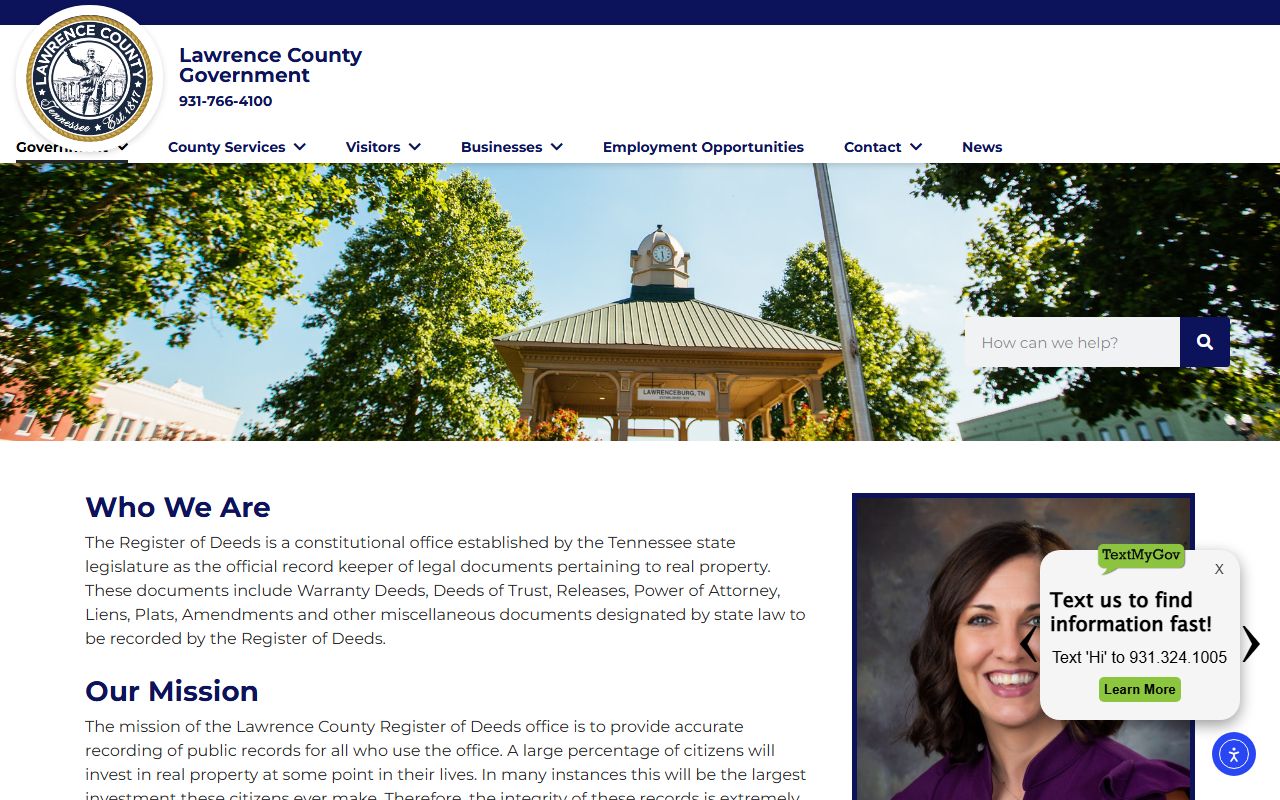
The local register image belongs here because the recorded-document side is the strongest county-specific source in the Lawrence research set.
Lawrence County Property Records And Deeds
The deed side of Lawrence County Property Records runs through the register of deeds as the constitutional office that keeps the official land record. The county page says the office records warranty deeds, deeds of trust, releases, powers of attorney, liens, plats, and amendments. That broad list matters because a property search often starts with one question and then turns into another. A tract may be easy to identify on a parcel card but still require the deed office to confirm a release, amendment, or older conveyance that changed the public record trail.
The research also says Lawrence County deed records run from 1819. That is a strong historical range for county-level land work, and it becomes even more useful because the Lawrence County Archives page says original deed books are held by the Register of Deeds while microfilmed and digitized deed records are available through the archives. That division is practical. If the live register page helps identify the right file, the archives can extend the search into older material without treating every request like a modern online lookup.
When a search moves into historical land work, the archives resource at lawcotnarchives.org becomes an important local companion to the register office. It explains that Lawrence County was created in 1817 and that land and deed records are available from 1819. That helps keep Lawrence County Property Records rooted in local history rather than in a generic deed-search template.
Lawrence County Archives And Assessment Context
The archives matter because Lawrence County Property Records are not just about current ownership. Older tracts, family land, and long-held parcels often require a historical check to see how the chain evolved. The archives page explains that original deed books remain with the register while the county keeps microfilmed and digitized access for older deed work. That makes Lawrence County one of the counties where local preservation directly improves modern property searching.
On the parcel side, the research also points to Tennessee's property assessment system. Even though the strongest local page in the research set is the register office, parcel and value questions still belong with the county assessor and the statewide Division of Property Assessments framework that supports county assessment work. That matters because Lawrence County Property Records often need both the recorded deed side and the current parcel side to tell a consistent story.
The property assessment manuals are also worth consulting when a classification or parcel-detail question becomes more technical than the county deed books can answer by themselves. Those state resources do not replace Lawrence County offices, but they explain the rules behind the local parcel record once the deed trail is already in hand.
Lawrence County Tax Records And Appeals
The research set is strongest on the register and archives, so the safest path for Lawrence County Property Records on the tax side is to keep the search local, then move to Tennessee's state tax-program and appeal guidance when the issue becomes value, relief, or account treatment. That keeps the page honest to the available local sources while still giving a practical route when a records question turns into a tax question.
If the disagreement is about value instead of the deed chain, the Tennessee State Board of Equalization and the value appeals guide explain the state-level appeal path and timing rule. That matters because Lawrence County Property Records users often need the parcel card, notice date, and recorded transfer history all in one file before they can decide whether a value dispute is worth pursuing.
Tennessee's property tax relief and property tax programs pages also matter on the tax side. They do not alter title or the deed trail, but they can affect how a qualifying owner reads the account side of Lawrence County Property Records after the local offices have established the parcel and document history.
Lawrence County Property Records Access
Most Lawrence County Property Records requests should begin locally in Lawrenceburg with the register of deeds and then move to the archives or county parcel side as needed. That sequence works because the register page is strong, the archives are specific, and the county has a real historical deed trail that supports deeper record work. If the question is about the recorded legal history, stay with the register and archives. If the question is about the current parcel or value, use the county assessment path next.
If the file you need is held by Tennessee rather than Lawrence County, the Comptroller public records request page is the right route for state-held records. That matters for assessment guidance and related materials that do not sit with the county offices. Lawrence County Property Records are easiest to use when the local office and archive search is exhausted first and state requests are reserved for state-held files.
More County Pages
If you need another county after reviewing Lawrence County Property Records, use the live county pages below. Each page follows the same layout but stays tied to its own local offices and record trail.