
Search Bledsoe County Property Records
Bledsoe County Property Records are easiest to sort from Pikeville, where the county offices, online search tools, and older land books each answer a different part of the search. If you are checking ownership, a parcel number, or the paper trail behind a deed, start with the county assessor and the register of deeds, then compare what you find with the statewide TPAD record card and the CourthouseDirect search. That mix helps when you need a quick parcel check or when you are tracing older land history tied to a Bledsoe County tract.
Bledsoe County Property Records Facts
Bledsoe County Property Records Search
The fastest Bledsoe County Property Records search starts with the Tennessee Property Assessment Data portal. The statewide portal supports address, owner, and parcel searches, and it can show property record cards with a summary of property information, land and improvements, measurements, classification, and ownership records. That gives you a clean first look before you call the county or ask for copies.
For Bledsoe County, the county and state tools work well together. TPAD can confirm how the parcel is indexed, while the county register and assessor can help you confirm the legal trail and the local file trail. If a result looks thin or you need an online starting point for a county search, CourthouseDirect also shows a Bledsoe County property records search page. It is useful for a fast check when you do not yet know whether the record you need is a deed, a mortgage, or a historical land entry.
See the CourthouseDirect search page at Property Records Search.
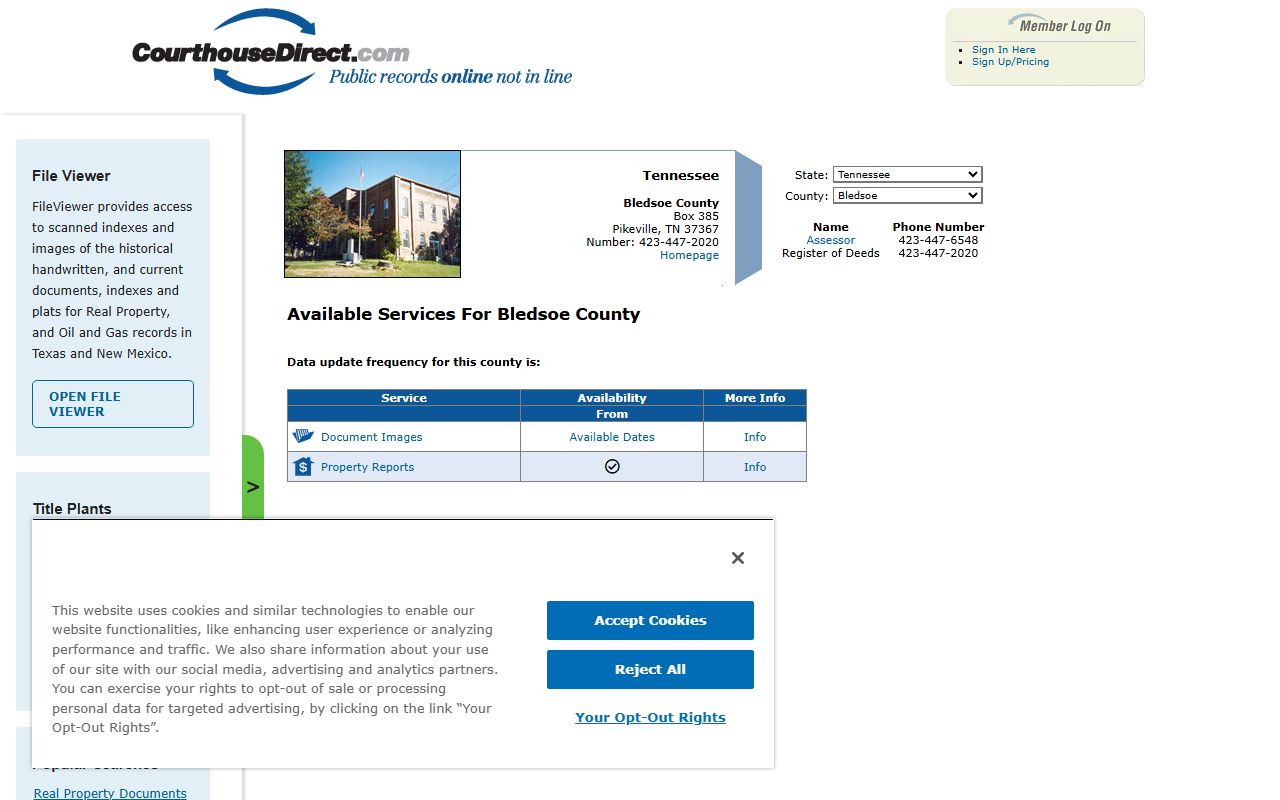
This search view is handy when you need a quick online pass before you move to the county office or compare the record with TPAD.
Use the owner name, parcel ID, or street address first. Those three details solve a lot of Bledsoe County Property Records problems without forcing a blind page-by-page search.
Note: TPAD is the best first check for a current parcel, but older Bledsoe County land work may still require the register office or archived records.
Bledsoe County Register Of Deeds
The CTAS register directory is the best public contact source for Bledsoe County Property Records because it keeps the local office details in one place. Jeanine Boynton is listed as register of deeds, with a mailing address of P.O. Box 385, Pikeville, TN 37367, phone (423) 447-2020, and email jboynton@titlesearcher.com. That gives you a direct route when you need a deed copy, a recording question, or help finding a filed instrument.
The same directory also helps place the office network around Pikeville. The property assessor is at Bledsoe County Courthouse, 3150 Main St., Pikeville, TN, and the assessor phone is (423) 447-6548. The county clerk is at 116 Main St., Pikeville, TN 37367, with phone (423) 447-2137. Those offices do different jobs, but together they shape the county record trail that many Bledsoe County Property Records searches depend on.
The county seat matters here. Pikeville is the center of the local record system, so a search that starts with the right office usually gets to the right book faster.
See the CTAS directory entry for Bledsoe County at CTAS Register Directory.
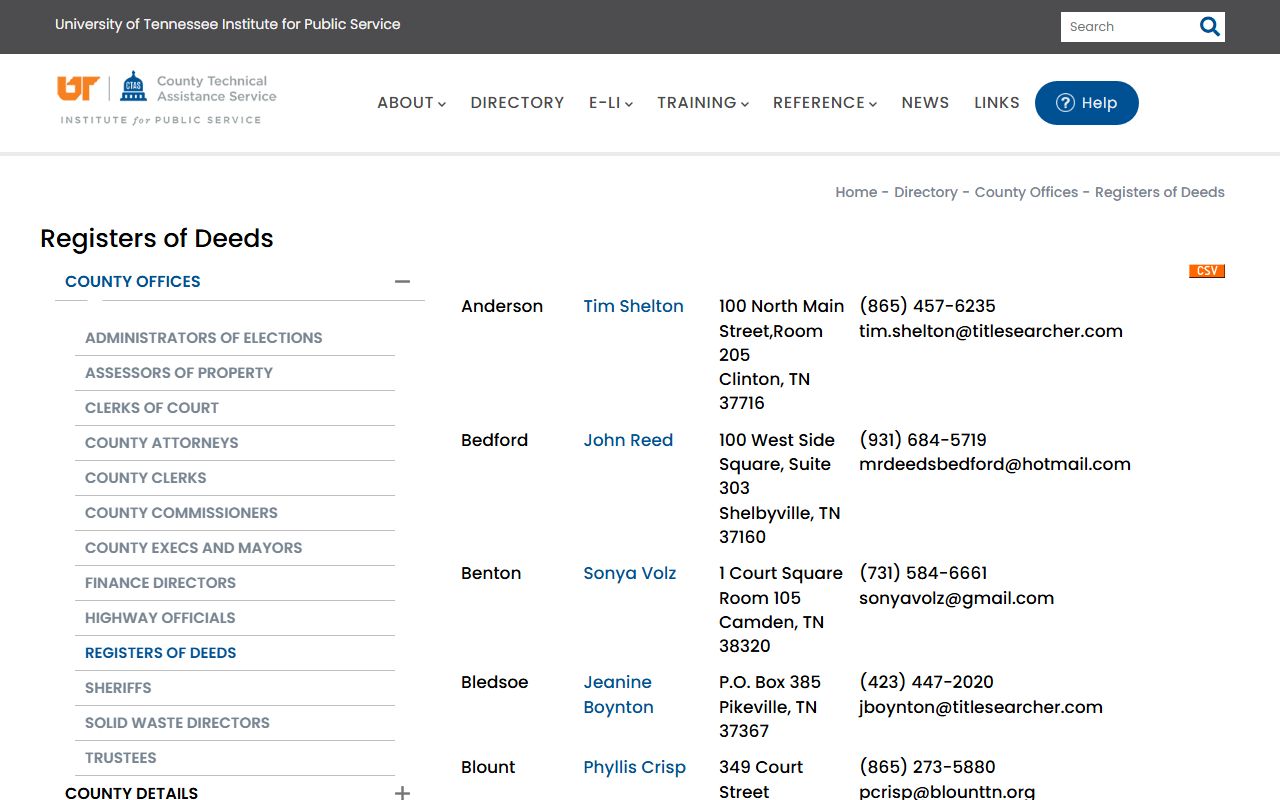
That directory entry is the quickest way to confirm the register contact details before you request a deed or ask where a record was filed.
Bledsoe County Property Records Cards
Bledsoe County Property Records also run through the state assessment system. The Tennessee Comptroller says property assessments cover 86 counties through IMPACT CAMA, and Bledsoe County can be searched through the statewide TPAD portal. That matters because TPAD supports parcel work that starts with an address, owner name, or parcel ID and then moves into the record card itself.
A TPAD record card can show summary property data, land and improvements, measurements, classification, and ownership records. Those details help you see whether the parcel is being carried the way you expect before you challenge a value or compare the parcel with a deed. The Comptroller also explains that assessors must send change notices at least 10 calendar days before the local board of equalization begins its annual session, so a late notice can affect how quickly you can review a change.
That timing matters because Bledsoe County Property Records searches are not only about the record card. They also show how the county is treating the parcel for tax purposes, which is the part that often matters most when values shift or a new improvement is added.
Review the Comptroller's property assessments page when you want the state rules behind the county card data. The statewide portal remains the cleanest way to cross-check a Bledsoe County parcel before you make a formal request.
Bledsoe County Recording Details
Recorded land work in Bledsoe County reaches back to the county's early years. Local historical research notes that land records begin with county organization and include transfer of real estate, mortgages, leases, surveys, and entries. That makes the county record set useful for more than deed transfer alone. It is also part of the chain that shows how a tract was used, financed, and divided over time.
State recording rules still matter when a Bledsoe County deed is filed. The Tennessee Department of Revenue explains the transfer tax at $0.37 per $100 of consideration or value, and deeds must include an affidavit of consideration to be recordable. If you are recording a deed of trust, the maximum principal indebtedness language also matters, so the paper needs to match the tax and recording rule before it is accepted.
Those rules are not abstract. They affect the exact copy a clerk or register will accept, and they change how much a filing costs. That is why Bledsoe County Property Records searches often move from the assessor to the deed book and then to the tax rule that governs the filing.
See the state transfer tax page at Department of Revenue for the deed tax rule and recordability language.
Bledsoe County Property Records History
Older Bledsoe County Property Records can be uneven because courthouse fires in 1904 and 1964 damaged historical records. Even so, the surviving history is still strong enough to help with long title chains. Local historical notes place land records from 1808, probate records from 1883, marriage records from 1908, chancery minutes from 1836, and circuit minutes from 1845. That gives you multiple record paths when one file type does not answer the question.
Tax records from 1837 to 1839, 1861, and 1888 to 1889 are held at the Tennessee State Library and Archives. When the county book is thin or a gap appears in the title trail, that archive can help fill in the missing years. It is especially useful when you are checking a tract that moved through several families before modern indexing began.
The archive route is not a replacement for local books. It is the backup that makes old Bledsoe County Property Records searches work when the courthouse copy is lost, damaged, or simply too early for the local index.
Use the Tennessee State Library and Archives when your search moves from a current parcel into older county land history.
Note: Fires in 1904 and 1964 damaged older county records, so a missing book entry does not always mean the record never existed.
Bledsoe County Property Records Help
If a Bledsoe County Property Records issue turns into a value dispute, the appeal path starts at the county board and can move to the State Board of Equalization. State guidance says appeals must be filed on or before August 1 of the tax year, or within 45 days of the date the local board action notice was sent, whichever is later. That makes the notice date important, not just the value itself.
The state also offers property tax relief and tax freeze programs. Tax relief can help qualified elderly, disabled, and disabled veteran homeowners, while the freeze program can lock the tax amount for eligible homeowners age 65 and older on a primary residence. Those programs are separate from the assessment number, but they still affect the way a parcel is handled in real life.
If you need a state-held assessment file, manual, or related record, the Comptroller's public records request process is the right route. That office uses a public records coordinator for requests, and the process is the best fit when the county office does not have the state material you need.
Review the State Board of Equalization, property tax relief, property tax programs, and public records requests pages when you need the state rules behind the county file.
County Pages
If your Bledsoe County Property Records search crosses a county line, use the county index to move to the right page before you compare names, dates, or parcel details. The same record type can look different from one county to the next.