
Search Spring Hill Property Records
Spring Hill Property Records are more complex than most city pages because the city spans both Williamson County and Maury County while also collecting its own city property taxes. If you need to verify a parcel, connect a city tax bill to the right county assessment file, or understand which county office controls a deed or parcel search for a Spring Hill address, the search has to start with the city’s own tax page and then move to the correct county. This guide brings the main Spring Hill Property Records paths together so the dual-county structure stays clear instead of turning into a generic city search.
Spring Hill Property Records Facts
Spring Hill Property Records Search
The first stop for Spring Hill Property Records is the city property-tax page at springhilltn.org/296/Property-Taxes and its related tax-information page at springhilltn.org/100/Property-Tax. The research says the city collects property taxes separately from Williamson County and Maury County, even though assessment is handled by the two county assessors. It also says the tax rate is set by the Board of Mayor and Aldermen, taxes are due October 1, penalties apply after the due date, and online payment is available. That matters because a Spring Hill search has to start by deciding whether the issue is city tax, county parcel, or county deed work.
Spring Hill Property Records therefore need a cleaner split than most city pages. The city handles its own tax collection. The counties handle assessment and parcel support. That means the same address may require city tax review plus county parcel review, depending on the record you need. If the question is a current city bill, start with the city page. If the question is a parcel, owner, or deed trail, move to the county side after you know whether the property sits in Williamson County or Maury County.
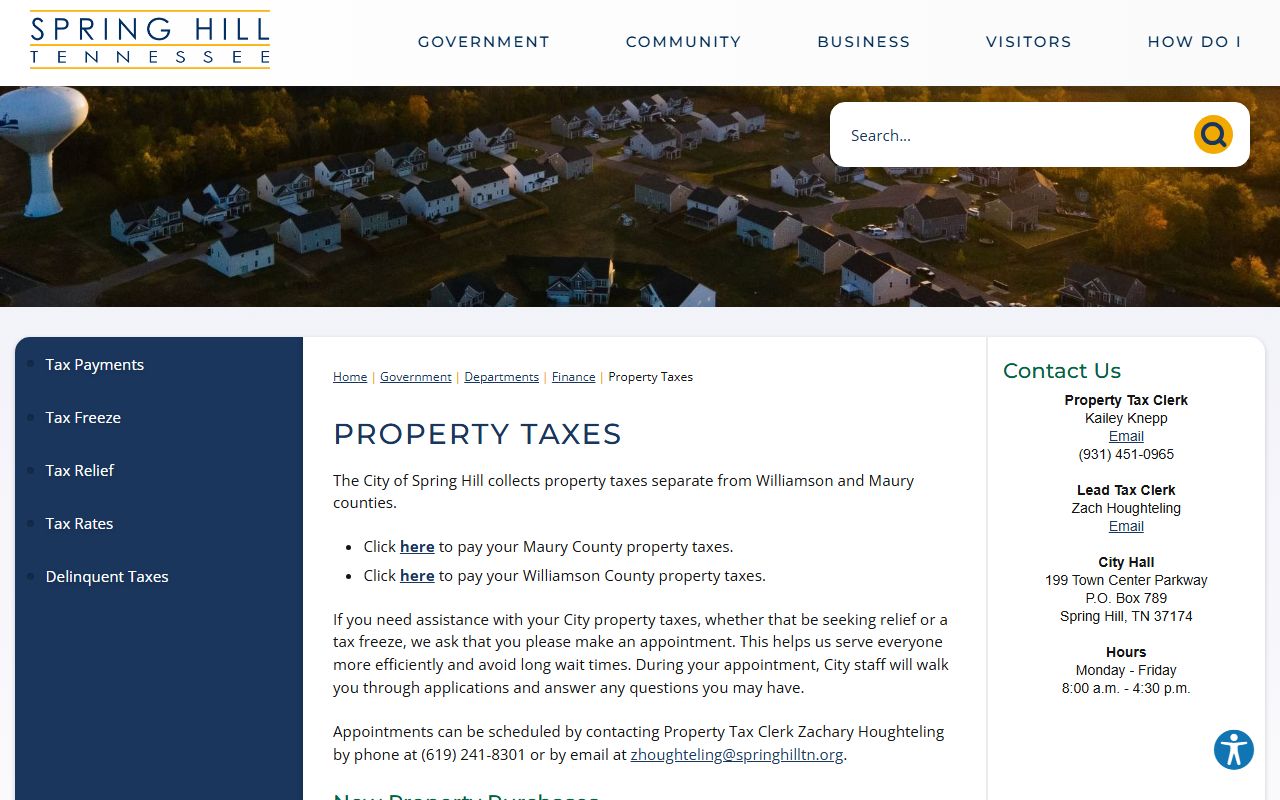
The city tax image fits here because Spring Hill Property Records are defined first by the city’s separate tax collection and only then by the county parcel systems behind it.
Spring Hill Property Records And Taxes
The city tax side is what makes Spring Hill Property Records different from a standard county-dependent city page. The research says the city collects taxes separately from both counties, which means a city tax bill cannot be treated as a county-only issue. The due date and penalty note from the city page also matter because they show the city is running its own payment timeline rather than simply passing through the county collection structure.
That city tax layer should still be matched to the correct county assessment file. The city page itself says assessment is performed by the Maury County and Williamson County assessors. That means a Spring Hill Property Records search is not complete until the city tax account is tied back to the right county parcel. A city bill without county parcel context can leave the search half-finished, especially when an address sits in a part of Spring Hill that users may assume belongs to the other county.
Tennessee’s property tax relief and property tax programs pages are also useful once the county side is clear and the question turns into relief, freeze, or other program issues tied to the account.
Spring Hill Property Records By County
The county side of Spring Hill Property Records depends on which side of the city a parcel actually falls in. Williamson County operates an independent CAMA system, which means Spring Hill properties on the Williamson side should be tied to local county systems rather than TPAD. The manifest gives a usable Williamson county-info image, and the Williamson county page on this site already explains the county tax portal and assessor structure that support Spring Hill properties in that county.
Spring Hill properties on the Maury County side should be tied to Maury County parcel and deed support instead. That matters because a city tax question may look the same at first no matter where the parcel sits, but the county assessment and deed records behind it are not the same. Spring Hill Property Records work best when the city bill is treated as the common front door and the county parcel file is treated as the next step that depends on location.
The safest workflow is simple. Start with the city tax page. Confirm which county the parcel belongs to. Then use the county page that actually controls the parcel and deed side. That prevents a Spring Hill address from being searched in the wrong county system.
Spring Hill Property Records Appeals
When a value issue develops, the appeal side of Spring Hill Property Records belongs with the county assessment system, not the city tax page alone. The city explains the tax rate and the separate city collection setup, but the assessed value underneath it is still county work. That means an appeal has to be directed through the county that controls the parcel, whether that is Maury County or Williamson County.
Tennessee’s State Board of Equalization and the value appeals guide explain the broader review path after local county action. Those state resources matter when the disagreement is about the assessment that drives the city bill rather than about the city collection process itself. Keeping the city tax record and the county parcel file together is the best way to keep a Spring Hill appeal clear.
County Pages For Spring Hill
Spring Hill Property Records depend on both county systems behind the city line. Use the county pages below after you identify which side of Spring Hill the parcel actually belongs to.