
Search Gallatin Property Records
Gallatin Property Records are city-facing records tied to Sumner County assessment and deed systems, so the best search usually starts with the city tax page and then moves to the county record that actually holds the parcel or deed. If you need to look up a bill, verify how a property is assessed, or confirm the recorded document trail behind a Gallatin address, the right first step is to match the question to the office that keeps that part of the file. This page brings the main Gallatin Property Records routes together so the search stays local and practical from the start.
Gallatin Property Records Facts
Gallatin Property Records Search
The city-facing source for Gallatin Property Records is the property-tax page at gallatintn.gov/474/Property-Tax. The research says the 2025 property tax rate is $0.5295 per $100 assessed value and that taxes are due by the last day of February each year. That matters because Gallatin searches often begin with a bill or payment question before they turn into a parcel or deed search. The city page gives you the current tax-side structure quickly, which is useful when you need to know whether the problem is a payment, a rate, or an assessed-value question.
The same Gallatin research says the tax rate is set by the City Council, assessment is handled by the Sumner County Assessor, payment is available through an online portal, and tax relief exists for qualifying property owners. That makes Gallatin Property Records a two-step search. Use the city tax page for the bill, then move to the county side for the parcel and recorded document trail. A city bill alone will not show the county deed or assessment support behind it, so the county step still matters.
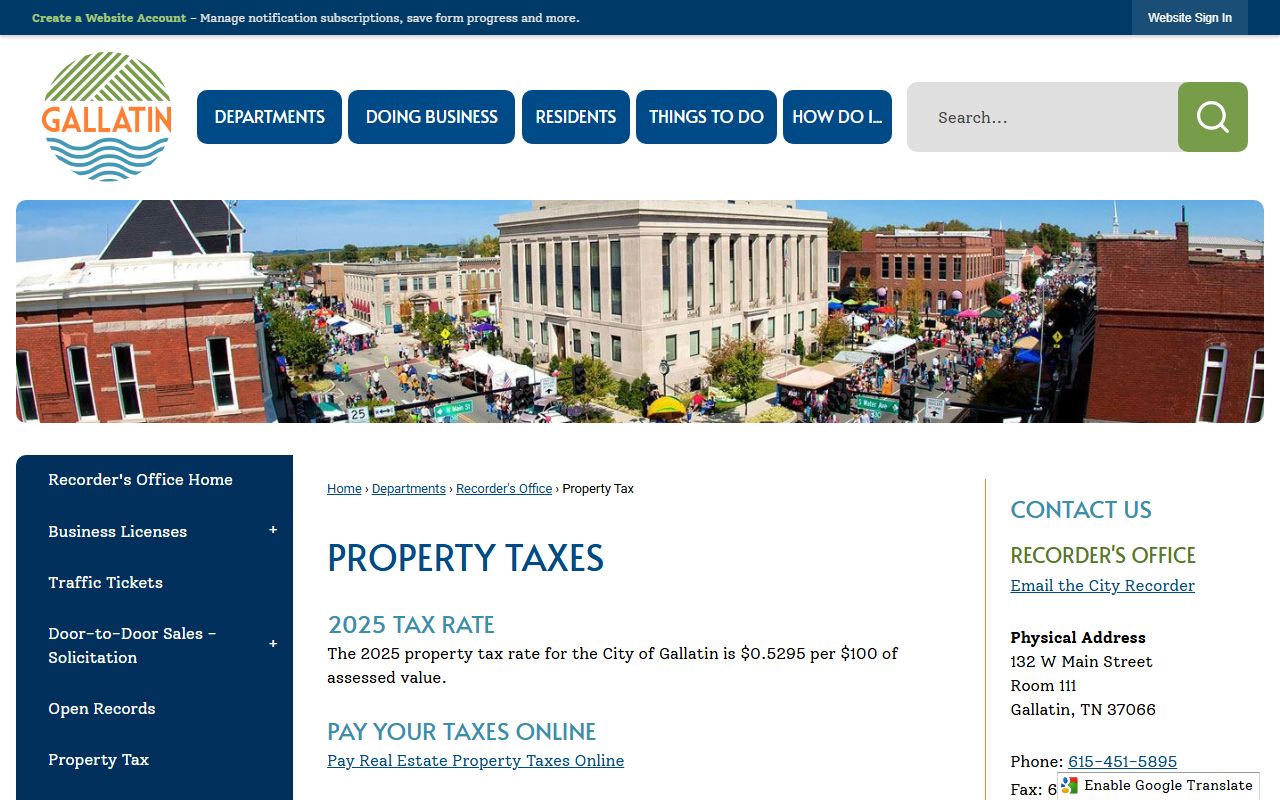
The city tax image fits here because Gallatin Property Records usually start with the city bill and then move to Sumner County for the underlying parcel and deed records.
Gallatin Property Records And Taxes
The city tax page is useful because it gives Gallatin Property Records users the main tax-side facts in one place. If the question is a current bill, a due date, or a tax-relief issue, the city page is the right first stop. But the city page also makes clear that Sumner County is the assessor. That means the taxable value underneath the Gallatin bill still comes from the county side, not from city hall alone.
The county side matters even more because Sumner County operates an independent CAMA system. That means Gallatin Property Records should not be framed around TPAD as the working local route. The county’s own register and GIS support are the more reliable sources. If the city tax page answers the amount due, the county side explains the assessed parcel behind it. Those two parts work together, but they answer different questions.
Tennessee’s property tax relief and property tax programs pages are also useful when the account is tied to a relief or program issue after the parcel has been identified.
Gallatin Property Records And Deeds
The recorded document side of Gallatin Property Records belongs with the Sumner County register of deeds. The research identifies Holly Hemmrich as register, notes that deed records are available online, and says e-recording is available. It also says a public search room is available. Those are the details that matter when the search is about a recorded deed, release, mortgage, plat, or another filed land instrument rather than just a city tax bill.
That county register side is important because it gives Gallatin Property Records a clear deed trail. If you need the actual recorded instrument, the register office is the right place to start. The city tax page may tell you the amount due, but it will not show the whole ownership chain. The county register and the city tax page are related, yet they serve different parts of the property search.
Tennessee’s real property transfer tax guidance is a useful state reference when a transfer includes supporting tax paperwork. It does not replace the Gallatin or Sumner County record trail, but it helps explain why a deed packet can include more than one document type.
Gallatin Property Records Search Tools
Gallatin Property Records work best when the city tax page, county register, and county support pages are used together. Start with the city tax page when the question is amount due or payment timing. Move to the county register when the question is about a deed or another recorded document. Use the county assessment and GIS support when the issue is parcel identity or location. That is the basic structure of a clean Gallatin search.
The Sumner County GIS support is especially useful because it lets a user compare parcel data and assessment information with the register record. The register research also says a public search room is available, which matters if an online result is not enough and the search needs direct office help. Gallatin Property Records become easier to use when the tax, deed, and parcel layers are kept separate long enough to see what each one is actually answering.
County support also helps because the register page and county contact information make it possible to move from an online result to a live office without guessing. That is often the difference between finding the right instrument and getting stuck with a generic property search result.
Gallatin Property Records Appeals
When a value issue becomes the real problem, the appeal side of Gallatin Property Records shifts from the city bill into county and state review. The city tax page gives the tax rate and due date, but the county assessment side is where the parcel value lives. If the assessed value or classification seems off, the county record should be checked before a formal appeal is filed.
Tennessee’s State Board of Equalization and the value appeals guide explain the broader review process after local county action. Those pages matter when the dispute is about the assessed value behind the Gallatin bill rather than about the bill itself. Staying organized is the key. Keep the city tax page, county parcel file, and any notice or billing record together before deciding what the next step should be.
Sumner County Property Records
Gallatin Property Records depend on Sumner County for the parcel, assessment, and deed records behind the city tax page. Use the county pages if you need the broader property-record structure behind a Gallatin search.
Other Tennessee Cities
Use the city pages below to connect a Tennessee city to the county offices that actually keep its property records.