
Search Columbia Property Records
Columbia Property Records are easiest to search when the city tax page is used as the front door and the Maury County assessment file is used as the back end of the record. If you need to look up a city bill, understand how a parcel is being carried, check a tax-relief question, or move from a city notice to a county parcel record, the search works best when each office stays in its proper lane. This guide gathers the main Columbia Property Records routes together so the search stays tied to Columbia and Maury County instead of turning into a generic property search.
Columbia Property Records Facts
Columbia Property Records Search
The city-facing source for Columbia Property Records is the property-tax page at columbiatn.gov/213/Property-Tax. The research says the tax bill runs from the first Monday in October through the last day of February, with penalties that begin at 0.5 percent through the end of December, add another 0.5 percent on January 1, and then move to 1 percent per month on February 1. It also notes a state tax-relief program for qualifying property owners, with age, disability, income, and veteran-related criteria. Those facts matter because many Columbia searches start with a bill before they move into the county parcel file.
Columbia Property Records then need Maury County support when the question shifts to the parcel and appraisal side. The county assessor page at maurycounty-tn.gov/departments/property_assessor gives the county property search, GIS mapping, appeals through the Board of Equalization, and periodic reappraisal reviews. That county layer is what turns a city tax question into a usable property record search.
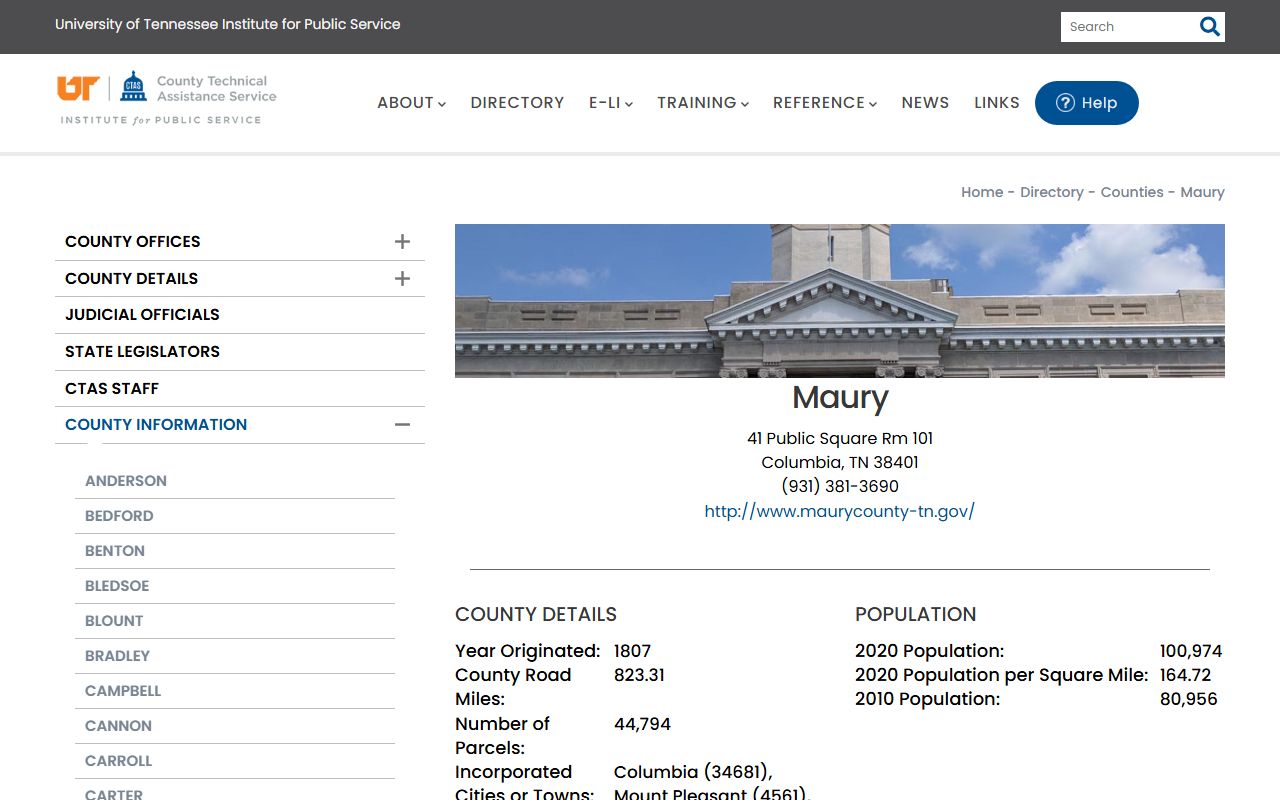
The Maury County image fits here because Columbia Property Records depend on the county parcel file once the city tax page has identified the account.
Columbia Property Records And Taxes
The tax side is important because Columbia Property Records often start with a city bill. The city page makes clear that the tax due date, penalties, and tax-relief eligibility are all part of the Columbia property-tax workflow. That means the city page should be used first when the question is about current taxes or relief, but it should not be treated as a substitute for the county parcel record.
Once the bill is identified, the county assessor becomes the next stop. The Maury County assessor page is the place to check the parcel, GIS map, appeal process, and valuation review. Columbia Property Records are easier to understand when the tax page and the county parcel file are read together instead of separately.
That split also helps when a Columbia address belongs to a property owner who is trying to confirm whether a tax notice was mailed to the right place. The city page explains when the bill is due and what relief options exist, while the county assessor explains how the parcel is being carried in the county file. If the amount due looks unfamiliar, the county side can show whether the parcel data, appraisal review, or appeal timing needs a second look.
Columbia Property Records therefore work best as a two-part search. The city tax page gives the payment and relief framework. The county assessor gives the parcel and GIS framework. Used together, they make the tax record easier to read and easier to explain.
Tennessee’s property tax relief and property tax programs pages can help once the county parcel is clear and the question turns into state-supported relief or program review.
Columbia Property Records Appeals
When a value issue develops, the appeal side of Columbia Property Records moves out of the city tax page and into the county assessment system. The Maury County assessor page says appeals go through the Board of Equalization, and Tennessee’s State Board of Equalization and the value appeals guide explain the wider review path after local county action. Those pages matter when the dispute is about assessed value rather than the city tax page itself.
Columbia Property Records users should keep the bill, parcel details, and notice dates together before moving into appeal review. That keeps the city and county process organized and makes it easier to see whether the problem belongs with the tax page, the county parcel file, or the formal appeal route.
That appeal path can be especially important when the city tax page includes a relief note or a senior-credit question. A relief program can reduce the tax impact without changing the underlying parcel, while an appeal changes the county value review. Keeping those two ideas separate makes the Columbia record easier to work through.
Maury County Property Records
Columbia Property Records depend on Maury County for the parcel, assessment, and broader county property file behind the city tax page. Use the county page if you need the county assessor and parcel context.
Other Tennessee Cities
Use the city pages below to connect a Tennessee city to the county parcel, deed, and tax offices that actually keep its property records.