
Search Lauderdale County Property Records
Lauderdale County Property Records are centered in Ripley, where the courthouse offices handle deeds, assessment questions, tax accounts, and owner updates for the rest of the county. If you are trying to confirm a transfer, pull a parcel clue, follow a tax bill, or find the right office for a request, the local path starts with the assessor, register of deeds, and trustee at 100 Court Square. This page keeps the search tied to the county seat and the official contacts so you can move from a name, address, or parcel detail to the record you actually need without guessing.
Lauderdale County Property Records Facts
Lauderdale County Property Records Search
The CTAS county profile at ctas.tennessee.edu/county/lauderdale is the cleanest local starting point for Lauderdale County Property Records because it ties the county seat, courthouse address, and current county officials together in one place. CTAS lists Lauderdale County at 100 Court Square in Ripley, with Jason Chrestman as assessor of property, Greg Summar as register of deeds, and Judy Conrad as trustee. That is the core office set you want when your search begins with ownership, deed history, or a tax question instead of a statewide portal or a third-party directory.
The county government page at lauderdalecountytn.org/living_government.html also gives residents a local landing page for government services, but the useful detail for Lauderdale County Property Records is the courthouse itself. If you are searching by owner name, site address, or a parcel clue, the offices in Ripley are where the record trail becomes concrete. The county profile shows the courthouse-centered structure clearly, and it is a better anchor than assuming a separate county search system is always available.
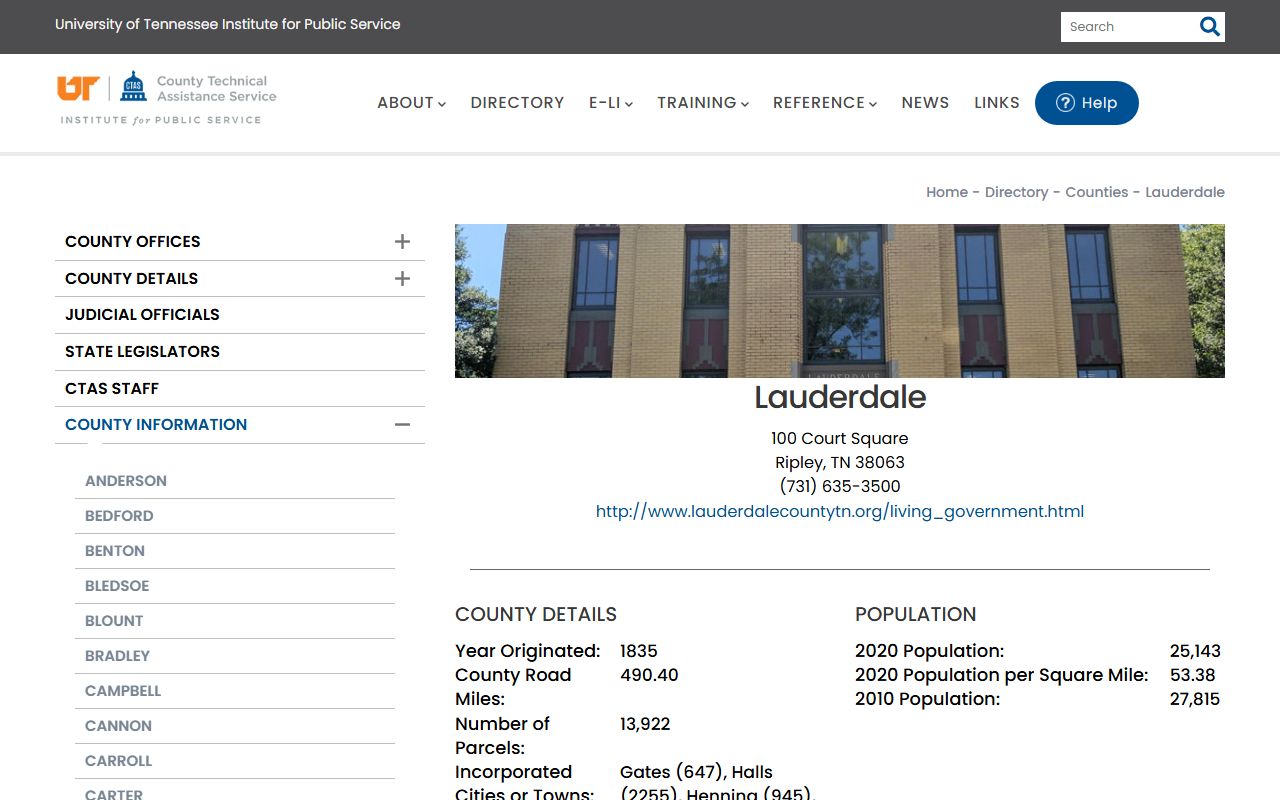
That CTAS image is useful because it reinforces the basic local pattern. Lauderdale County Property Records are not a remote, abstract file set. They are tied to the courthouse offices in Ripley, the county seat, and to the contact names that CTAS publishes for the assessor, register, and trustee. When you know which office controls the record, the rest of the search gets easier and much more specific.
For county context, Lauderdale County has incorporated places that include Gates, Halls, Henning, and Ripley. That matters because a parcel question can come from a small town lot, a rural tract, or a property right on the edge of the city limits. The record search should start with the office that actually created or maintains the file, not with a general internet search that strips away the local jurisdiction.
Lauderdale County Property Records and Deeds
Recorded land documents sit with the Register of Deeds, and that office is the best place to start when Lauderdale County Property Records are really about ownership history. Deeds, mortgages, plats, and related instruments can show how a parcel changed hands, what description was used, and whether a later transfer should be tied back to an earlier book or instrument number. Greg Summar is the current register listed in CTAS, and the office phone is 731-635-2171, with the county profile also publishing the courthouse location and email contact. When the chain of title matters, the deed office matters first.
A strong deed search usually begins with a grantor or grantee name, then narrows to a book, page, or instrument number if you already have one. That approach works better than starting broad because Lauderdale County Property Records can include multiple parcels under a single family name, trust, or business entity. If you already know the subdivision name or a legal description fragment, bring that with you as well. The register office can usually move faster when the search clue matches the way the record was filed.
Deed recording in Tennessee also carries a transfer-tax layer. The Tennessee Department of Revenue explains that the real property transfer tax applies at 37 cents per $100 of consideration or value. That statewide rule is not a county-specific lookup tool, but it does shape how a filed deed is understood after it is recorded. For Lauderdale County Property Records, that means the legal transfer, the recording paper trail, and the tax context belong in the same conversation even when the offices involved are different.
When a copy request is the goal, start with the register rather than the assessor. The assessor can help with parcel identity, but the register keeps the actual recorded land documents. That distinction saves time and keeps a Lauderdale County Property Records search from drifting into the wrong office queue.
Lauderdale County Property Records Taxes
The assessor and trustee split the tax side of Lauderdale County Property Records. Jason Chrestman is the assessor in the CTAS profile, and Judy Conrad is the trustee. The assessor side is where parcel detail, classification, and value questions usually begin, while the trustee side is where the tax bill and payment record come together. When a search turns from deed history into a current bill, those two offices are the local route that matters most.
State guidance from the Comptroller helps frame that work. The Property Assessments page explains the county assessment structure, and the assessment data resources are useful for statewide context when you want to understand how property records fit into the broader Tennessee system. For Lauderdale County Property Records, that state framework is a reference point, not a substitute for the courthouse offices in Ripley. The county offices still control the local record trail, and the state material mainly helps you interpret what you see there.
Tax relief and tax freeze programs can also affect how a property owner experiences the tax record. The Comptroller’s property tax relief page explains the state-backed relief program for qualifying homeowners, and the property tax programs page covers the tax freeze option for eligible older homeowners. Those programs do not change the deed itself, but they do change the way some Lauderdale County Property Records look on the billing side. If the bill seems high or unexpectedly structured, it is worth checking whether a relief or freeze program is involved before assuming the assessor made a mistake.
For a taxpayer who only needs to know whether the office has the right account, the trustee is usually the first stop. For a taxpayer who thinks the value, classification, or parcel makeup is wrong, the assessor should be next. Keeping those roles separate is the simplest way to avoid wasted trips when researching Lauderdale County Property Records.
Lauderdale County Property Records Appeals
If Lauderdale County Property Records lead to a value dispute, Tennessee’s appeal route matters as much as the local assessment card. The State Board of Equalization and the value appeals guidance explain that appeals from a local board of equalization must be filed on or before August 1 of the tax year, or within 45 days of the date the local board action notice was sent, whichever is later. That makes the notice date a key fact, because it can determine whether the state appeal is still open.
The local board comes first, then the state board. That sequence matters because a taxpayer should bring the county record, the notice, and any supporting documents together before moving the case upward. In practice, that means the best Lauderdale County Property Records appeal packet usually includes the assessment notice, the parcel reference, and whatever deed, survey, or photograph explains why the local record does not match the property. The cleaner the paper trail, the easier the review.
State-held records can also be requested directly when you need supporting files that are not already posted online. The Comptroller’s public records requests page explains that many assessment-related records are available on the office website and that requests for inspection or copies go through the Public Records Request Coordinator. If your Lauderdale County Property Records question requires state material rather than county material, that is the route to use. It is slower than a portal search, but it is the right tool when the record lives with the state.
One practical point: if the issue is only a mismatched name, address, or parcel label, ask the assessor or trustee to confirm the account before assuming the value must be appealed. Some Lauderdale County Property Records problems are data issues, not valuation disputes, and that distinction can save a taxpayer from filing the wrong kind of challenge.
Lauderdale County Property Records Access
Access is where Lauderdale County Property Records become useful in day-to-day work. The county profile gives the courthouse address, office names, and direct contact details, which is exactly what someone needs when a record is not fully clear online. CTAS also shows Lauderdale County as having 13,922 parcels, which is a reminder that the local system is large enough to require good identifiers. A name, a parcel clue, or a deed reference will always beat a vague description when you are trying to get the right file.
The county website can help with general government navigation, but it is not the same thing as a dependable parcel search tool. For Lauderdale County Property Records, the courthouse offices in Ripley are the dependable local route, and the Comptroller’s Property Assessments page is the better statewide reference if you need context on how Tennessee handles assessment work. I would not treat a separate county TPAD search path as guaranteed here, so the office contacts and the state assessment resources are the safer starting points.
If your question is older than the current county record set, the public records request route is still available for state-held material, and the deed office remains the local place to confirm what was recorded in Lauderdale County itself. That split is important. Some records can be answered from the courthouse, some from the state office, and some only when you combine both. Lauderdale County Property Records searches go faster when you know which side of that line you are on before you begin.
More County Pages
If you want to compare Lauderdale County Property Records with other Tennessee counties on this site, the live county pages below are a useful next step. Each page keeps the same structure, but the office contacts and local search details stay tied to the county they belong to.