
Search Fentress County Property Records
Fentress County Property Records are centered on the assessor, the county register trail, and the state search tools that help connect a parcel to its owner history. The office in Jamestown keeps the current ownership map, improvement details, property accounts, and mineral right assessments in one place. That makes the county easier to work than a bigger market. It also means a careful search can move fast if you start with the right parcel number, address, or owner name. This page gathers the main Fentress County Property Records sources so you can match the parcel, the deed, and the tax side without guesswork.
Fentress County Property Records Facts
Fentress County Property Records Search
The official assessor page is the clearest starting point for Fentress County Property Records. The office is led by Melynda Sullivan and is listed at 101 Main Street in Jamestown, with phone number 931-879-9194, fax 931-879-9981, and email melynda.sullivan@cot.tn.gov. The assessor page says the office maintains property records and maps of current ownership. It also tracks improvements to properties, property accounts, and mineral right assessments. That mix matters because a parcel search is rarely just a name search. It is a place search, a value search, and a record check all at once.
For online parcel work, Fentress County Property Records are available through the Tennessee Property Assessment Data portal. TPAD supports address, owner, and parcel searches, and the record card view gives the core parcel details that most people need first. If the parcel number is close but not exact, TPAD helps narrow the field quickly. If the owner name is a trust, business, or older family entry, the portal still gives you a place to start. Use the county assessor for the local file, then use TPAD when you want a digital view of the same Property Records trail.
The official Fentress County assessor page at fentresscountytn.gov/property-assessor is the live source for office contact and parcel support.
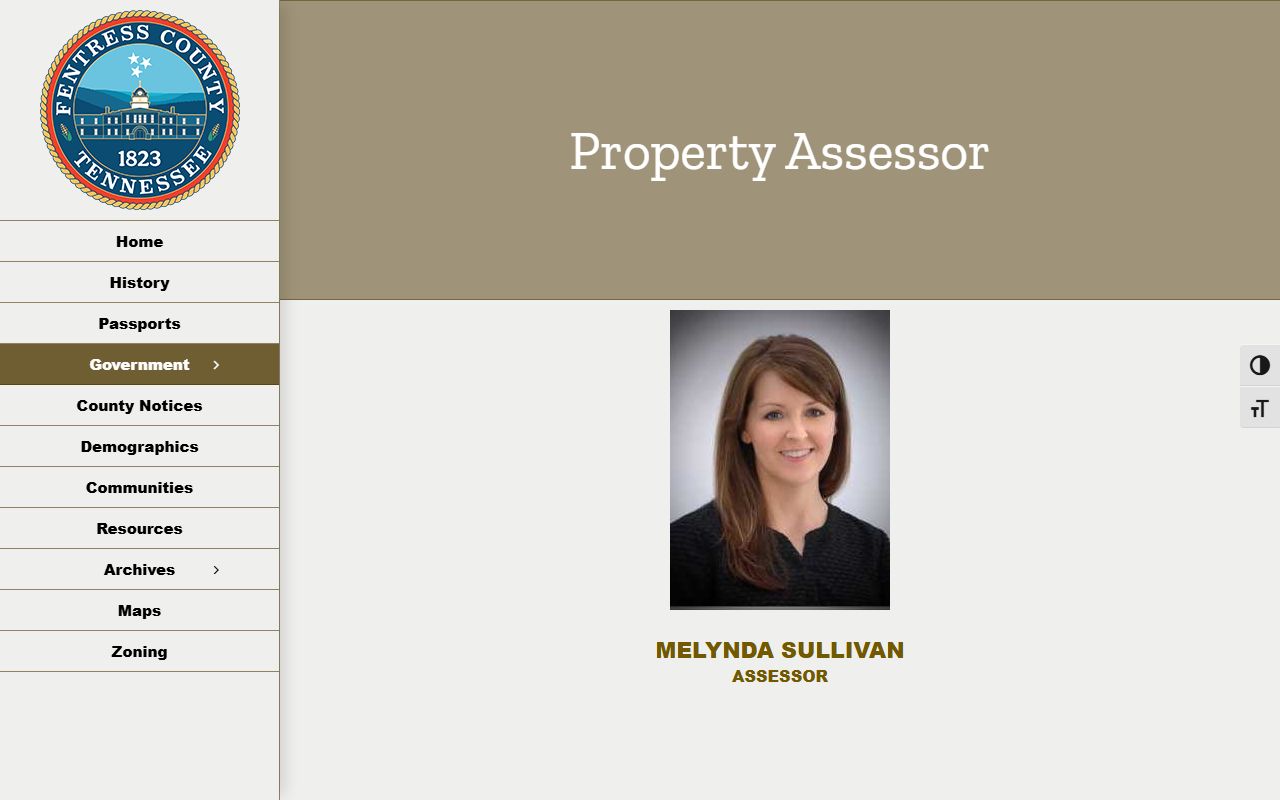
That office is the best place to confirm current ownership, improvements, and account notes before you move deeper into the Fentress County Property Records chain.
Fentress County Property Records Office
The county directory from CTAS helps place the local office in the wider record system. It lists Patricia Slaven as Register of Deeds and places the county seat in Jamestown. That detail matters even when you begin with the assessor. Property work often moves between the assessment file and the recording file, and both offices point back to the same county seat. Fentress County also had a 2020 population of 18,489, so the office load is lighter than in the large urban counties. That can make an in-person visit or phone call more direct, but it does not remove the need for a precise parcel reference.
Support research puts the county at about 16,137 parcels. It also suggests a median home value of $128,400 and a median property tax rate of 0.4 percent. Those figures are not the official assessment roll, but they do help frame the size of the local market. They suggest a county where land, homes, and family parcels still matter more than high-volume document traffic. For Fentress County Property Records, that usually means you get farther by matching the parcel first and the deed second, instead of trying to work backward from a tax bill alone.
When the office question is local, the assessor can explain the parcel side. When the question is about the recorded chain, the register side fills in the deed side of the file. Keep both in view and the Fentress County Property Records trail stays easier to read.
Fentress County Deed Records
Deed records give the ownership story behind the parcel card. In Fentress County, the recorded file can include deeds, mortgages, liens, contracts, plats, and leases. That record trail matters because the assessor file shows what exists now, while the deed file shows how the land moved over time. A single parcel can look simple on a map and still carry a long chain of transfers, boundary changes, or family conveyances. When you are trying to tie a tract to a person, a firm, or a trust, the deed side often provides the missing piece.
Supporting research notes that online access is often subscription-based and that the most useful search fields include name, book and page, file number, subdivision, and instrument number. That is a practical clue. The right deed reference can turn a slow hunt into a short one. A name search is fine. A book and page search is better. If you already have a subdivision or instrument number, you can usually move through the Fentress County Property Records chain with less noise and fewer false matches.
Use the deed record when you need the chain of title. Use the assessor record when you need the current parcel facts. They work together, but they do not answer the same question.
Fentress County Property Records Taxes
The tax side of Fentress County Property Records starts with the state real property transfer tax rule. Tennessee sets the tax at $0.37 per $100 of consideration or value. That matters when a deed is recorded, because the tax is tied to the transfer itself. If you are checking a deed packet, a sale date, or a closing record, the transfer tax rule helps you understand why the recorded papers include value language. It also helps you separate the deed charge from the yearly property tax bill.
State help also exists for qualifying owners. Tennessee property tax relief supports eligible elderly and disabled homeowners, and the property tax programs page covers the tax freeze program for qualifying primary residences. Those tools do not change the parcel map or the deed history. They change how the bill is handled. That difference matters. A parcel can still be fully recorded and fully assessed while the owner also receives help through a state program. For Fentress County Property Records, that means the tax line and the ownership line should be read side by side.
The Department of Revenue keeps the transfer tax rule in one place, and the state property tax pages explain the relief path for homeowners who qualify under Tennessee rules.
Note: Keep the parcel card, the deed, and the tax notice together so the Fentress County Property Records trail stays clear when a sale, transfer, or tax question comes up.
Fentress County Property Records Appeals
Appeals begin with the local review process. If the value looks off, the parcel record, improvement data, and notice date all matter. Tennessee state appeal rules say the State Board of Equalization filing deadline is August 1 of the tax year, or 45 days after the local board action notice is sent, whichever is later. That deadline is easy to miss if you wait on the bill and ignore the notice. For Fentress County Property Records, the safest move is to save the parcel page, the assessment notice, and any sales support before the deadline clock starts to run.
The state appeal path also ties back to the assessor notice rule. Tennessee requires assessors to send change notices at least 10 calendar days before the local board begins its annual session. That rule gives owners a short window to review the numbers and decide whether the change needs a formal challenge. If a record change does not match the property on the ground, the notice date becomes just as important as the value itself. The local board stays the first stop. The state board is the next step if the issue is not resolved.
Use the State Board of Equalization guidance for the formal appeal path and the value appeals page for the timing rules and review flow. Both pages help when a Fentress County Property Records search leads to a value dispute instead of a simple parcel lookup.
Note: The best appeal file is small, dated, and complete, which is why Fentress County Property Records should stay matched to the notice that started the dispute.
Fentress County Property Records Access
Most Fentress County Property Records requests stay local, but state-held assessment files still use the Comptroller request route. The state public records page explains that path for records kept by the Comptroller. That is useful when the question is about assessment materials, manuals, or other state-held records rather than a live county parcel file. The request process is not the same as a county counter visit, so it helps to know which office actually holds the file before you send the request.
If the file is local, start with the assessor. If it is recorded land history, move to the recording side. If it is a state assessment item, use the public records route. That order saves time. It also keeps the Fentress County Property Records search from drifting into the wrong office. The state process also asks for Tennessee citizenship proof when the request falls under its public records rules, so it is worth having the right ID ready before you file.
The Tennessee Comptroller public records requests page explains the state route for assessment files and related records.
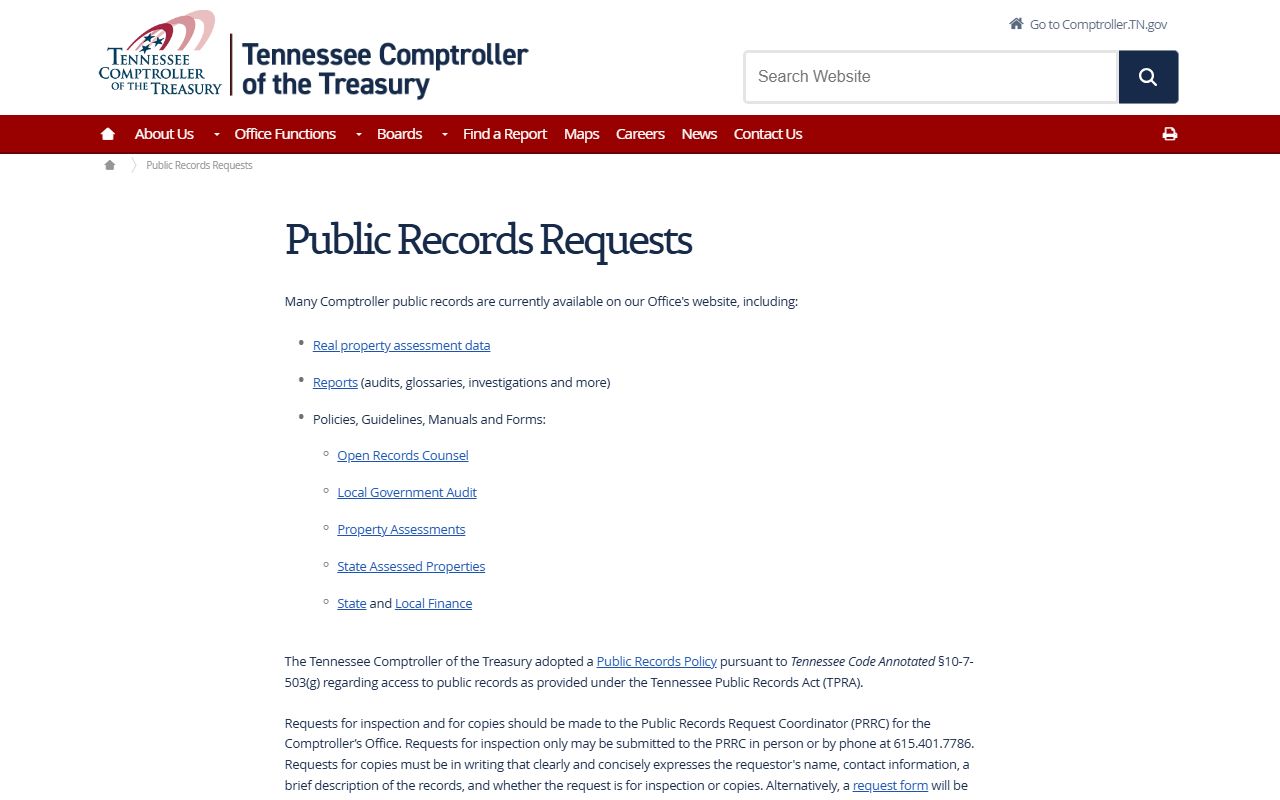
That page is the right backstop when a Fentress County Property Records question moves beyond county office files and into state-held materials.
Nearby Counties
If your parcel search crosses a county line, use the live county pages below. Each one stays tied to its own local Property Records system, so it is better to open the right county first than to force a wrong match.