
Search Cannon County Property Records
Cannon County property records connect parcel assessment data, deed-office access, tax contacts, and county office details for Woodbury and the rest of the county. A strong Cannon County search usually starts with the assessor because that office carries the parcel for tax purposes and ties the property to the statewide assessment data system. From there, you can move to deed access, GIS, and county tax records as needed. This page gathers the main Cannon County property records sources so you can search the parcel first and then move to the right office for copies or follow-up.
Cannon County Property Records Facts
Cannon County Property Records Search
The main local starting point for Cannon County property records is the Cannon County Property Assessor page. The research identifies Angela Schwartz as assessor and places the office at 200 West Main Street in the courthouse at Woodbury, Tennessee 37190. The office phone is 615-563-5437, the fax is 615-563-6476, and the assessor email is angela.schwartz@cot.tn.gov. That page explains the assessor's core job clearly: locate, classify, and appraise all taxable property under Tennessee law.
Cannon County property records searches also tie into the statewide assessment system. The assessor page says assessment data is available through the State Comptroller's real-estate assessment data website, which aligns with the Tennessee Property Assessment Data portal. TPAD helps users search by address, owner name, and parcel ID. It can also show record-card style details, which is useful when you need a current parcel snapshot before you call the county or order a recorded document.
The search works best when you start with the parcel and keep the owner name, address, and any deed reference together. Cannon County property records are easier to verify when the assessor card and the deed trail are tied to the same property from the start.
Cannon County Assessor Records
The assessor side of Cannon County property records is stronger than a simple value list. The county research says the office sends annual assessment change notices to owners whose values change, supports Greenbelt Property Status Designation under the Agricultural, Forest and Open Space Land Act of 1976, and handles tax-exemption applications for religious, scientific, educational, charitable, and other nonprofit organizations. That means the parcel record is tied to both routine value work and special status questions that can affect how the property is treated.
The extended county research also notes that the county structure includes a trustee, register of deeds, and courts, which matters because parcel questions often spread across offices. The assessor carries the taxable property record. The trustee handles the tax side. The register handles the recorded document side. Cannon County property records make more sense when those roles stay separate.
See the county assessor page directly at cannoncountytn.gov/property-assessor for the local office view.
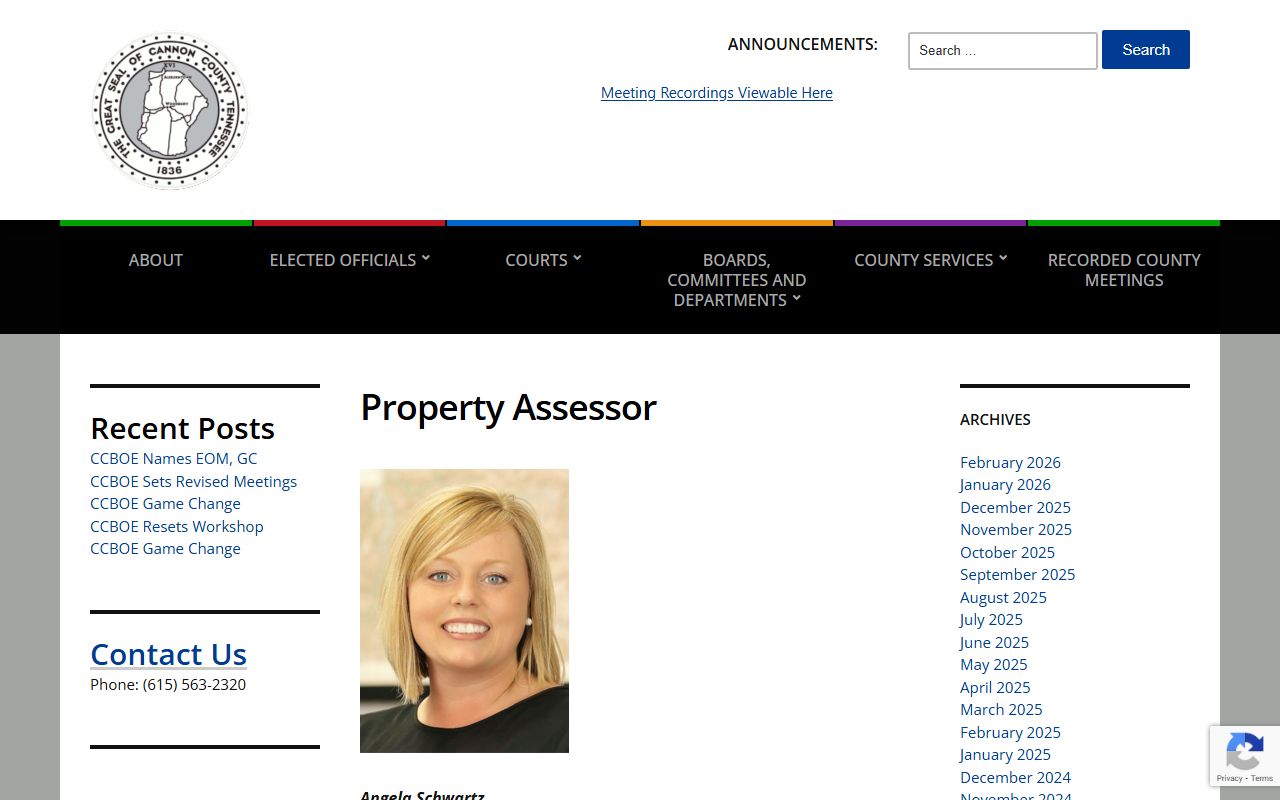
The assessor page is important because it gives Cannon County property records users the clearest local path for parcel classification, value questions, exemptions, and Greenbelt status.
Tennessee also requires assessors to mail change notices before the local board of equalization begins its annual session. That statewide rule matters in Cannon County because a value review starts with the notice date as much as with the value number itself.
Cannon County Deed Records
The recorded-document side of Cannon County property records is anchored by the register of deeds. The research uses the CTAS Cannon County page to identify Register of Deeds Sandy Hollandsworth with phone number 615-563-2041 and email shollandsworth@vcourthouse.net. That CTAS page also notes online property-search access, deeds access, tax records, and GIS availability, which helps connect the deed side to the parcel and map side without treating them as the same record.
The deed office matters because a parcel card is not a legal transfer document. Cannon County property records searches often start with current parcel data and then move to the deed office when the user needs the recorded ownership trail. That includes deeds, trust instruments, and related land documents that explain how the property moved over time. If you are checking a recent sale, a family transfer, or a parcel split, the recorded side is what turns a search result into an actual county filing.
Tennessee deed law also shapes local recording practice. The state real property transfer tax page explains the $0.37 per $100 rate and the affidavit of consideration rule for recorded deeds. That is a statewide requirement, but it affects Cannon County property records every time a transfer is filed locally.
Cannon County Property Records Offices
The extended county research on the Cannon County government site gives useful office context around the property-records system. It identifies Woodbury as the county seat and lists the property assessor, register of deeds, sheriff, trustee, and county courts among the elected or primary county offices. It also notes that online tax records and GIS are available. That matters because many Cannon County property records searches turn into tax or map questions before they turn into copy requests.
The same county page also helps place Cannon County within the Upper Cumberland region and the broader Nashville statistical area. That local-government framing is useful when a user sees a parcel or owner with a mailing address outside Cannon County and wants to confirm that the record still belongs in Woodbury. The county office structure matters more than the owner's mailing address when you are trying to identify the right property records jurisdiction.
See the county-government page at cannoncountytn.gov for a broader local-office view.
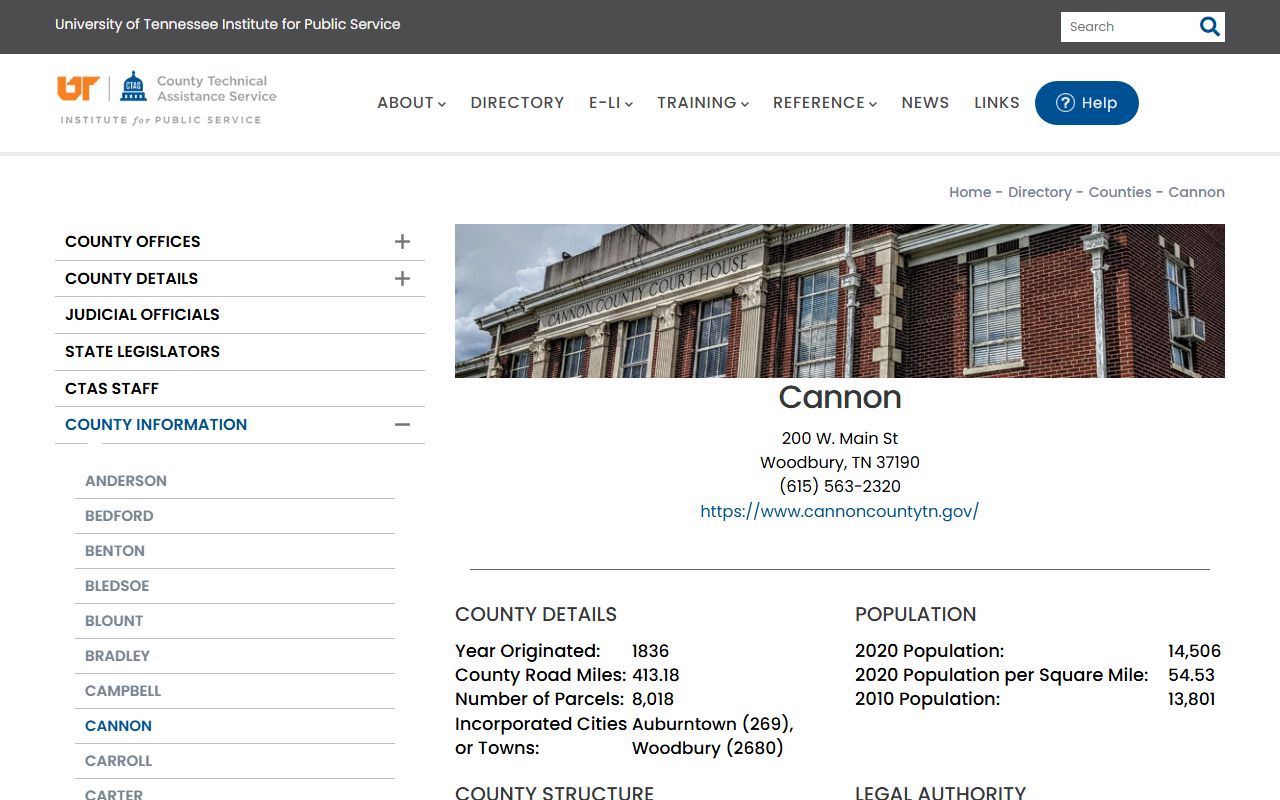
That county-information image works as support because Cannon County property records usually move between assessor, deed, tax, and county-office references rather than staying inside one narrow search screen.
Cannon County Property Appeals
If a Cannon County property records search turns into a value dispute, the first review stays local and the second level moves to the state. The State Board of Equalization and the value appeals guidance explain that state appeals must be filed on or before August 1 of the tax year, or within 45 days after the local board action notice was sent, whichever is later. That is why the change notice and local board result matter so much.
Cannon County property records tied to appeals should keep the parcel card, notice date, and any supporting sales or parcel facts together. The state also offers property tax relief and property tax programs for qualifying owners. Those programs do not change who owns the property, but they do affect how the tax side of the record works in practice.
Note: If the question is about a value change, start with the assessor. If the question is about the bill or relief status, the trustee side of the Cannon County property records system is usually the better next stop.
Cannon County Property Records Access
Most Cannon County property records requests stay local, but some assessment or policy materials sit at the state level. When that happens, the Comptroller public records request page is the proper route for state-held materials. That page explains the coordinator process and is more useful than guessing whether a county office controls a state assessment document.
For normal county work, though, the clean path is simple. Use the assessor to find the parcel. Use the register to follow the recorded land trail. Use county tax and GIS tools when the question shifts to payment, map position, or county service context. That order keeps Cannon County property records searches practical and reduces the chance of chasing the wrong office.
More County Pages
If you need another county after finishing a Cannon County property records search, use the live county pages below. Each page follows the same template but stays tied to its own county offices and local research.